
What is an iron condor?
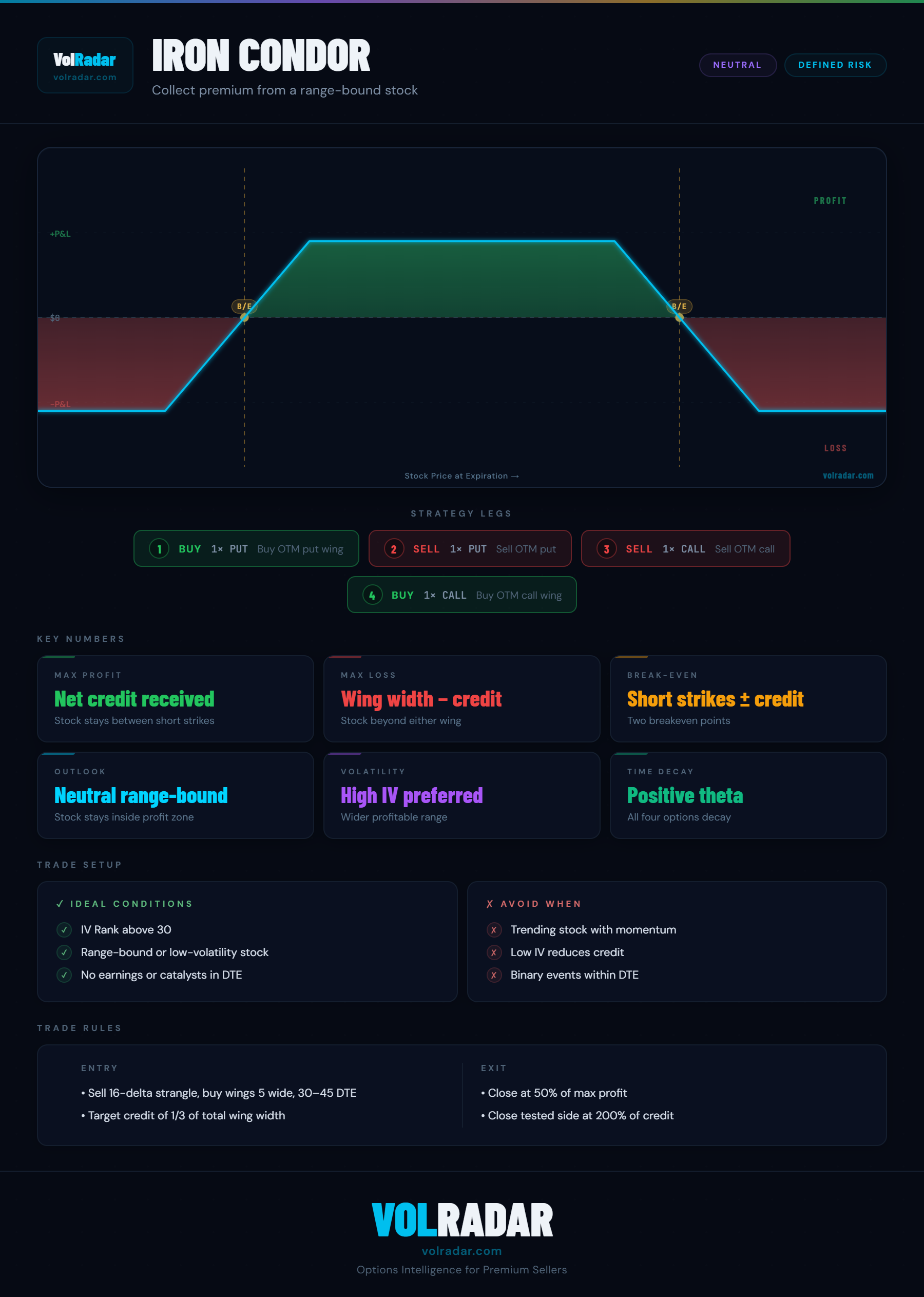
An iron condor combines a put credit spread and a call credit spread on the same stock with the same expiration. You sell an out-of-the-money put and call (collecting premium) while buying a further out-of-the-money put and call (capping risk). Profit is maximized when the stock stays between your short strikes through expiration. It is the most popular defined-risk strategy for premium sellers because risk is capped on both sides.
When to use iron condors
Iron condors work best in neutral, range-bound markets. The ideal conditions are: IV Rank above 50% (rich premiums), low RV Ratio (stock calming down), no earnings within DTE, and a Weather Score of at least 65. Avoid iron condors when a stock is trending strongly in one direction or when Term Structure is in backwardation (elevated near-term risk).
Choosing strikes
For the standard iron condor: sell the short strikes at approximately 15-20 delta (one standard deviation). Buy the protective wings 3-5 points further out (adjust for stock price). The width of the wings determines your max loss — wider wings collect more premium but increase risk. Use the Expected Move Calculator to confirm your short strikes are outside the 1σ range.
Managing the trade
Enter at 45 DTE for maximum time and manage at 50% of max profit — do not hold to expiration. If the stock moves toward one side, consider closing the tested spread and keeping the untested side. If the stock breaches a short strike, close the entire position at your predetermined loss limit (typically 1.5-2x the premium collected). Never wait and hope.
Iron condor vs iron butterfly
An iron butterfly sells the put and call at the same strike (ATM), creating a narrow profit zone but much higher premium. Iron condors spread the short strikes apart, giving a wider profit zone but collecting less. For most premium sellers, the iron condor is preferred because the wider profit zone means the stock can move moderately without threatening the position.
Iron condor math
Max Profit = net premium collected. Max Loss = width of widest spread minus premium collected. Breakeven = short strikes plus/minus premium. Return on Capital = premium collected / spread width (capital at risk). A typical iron condor might collect $1.50 on $5-wide spreads, giving 30% RoC with breakevens one standard deviation out. The key metric to optimize is Return on Capital relative to probability of profit.