Loading...
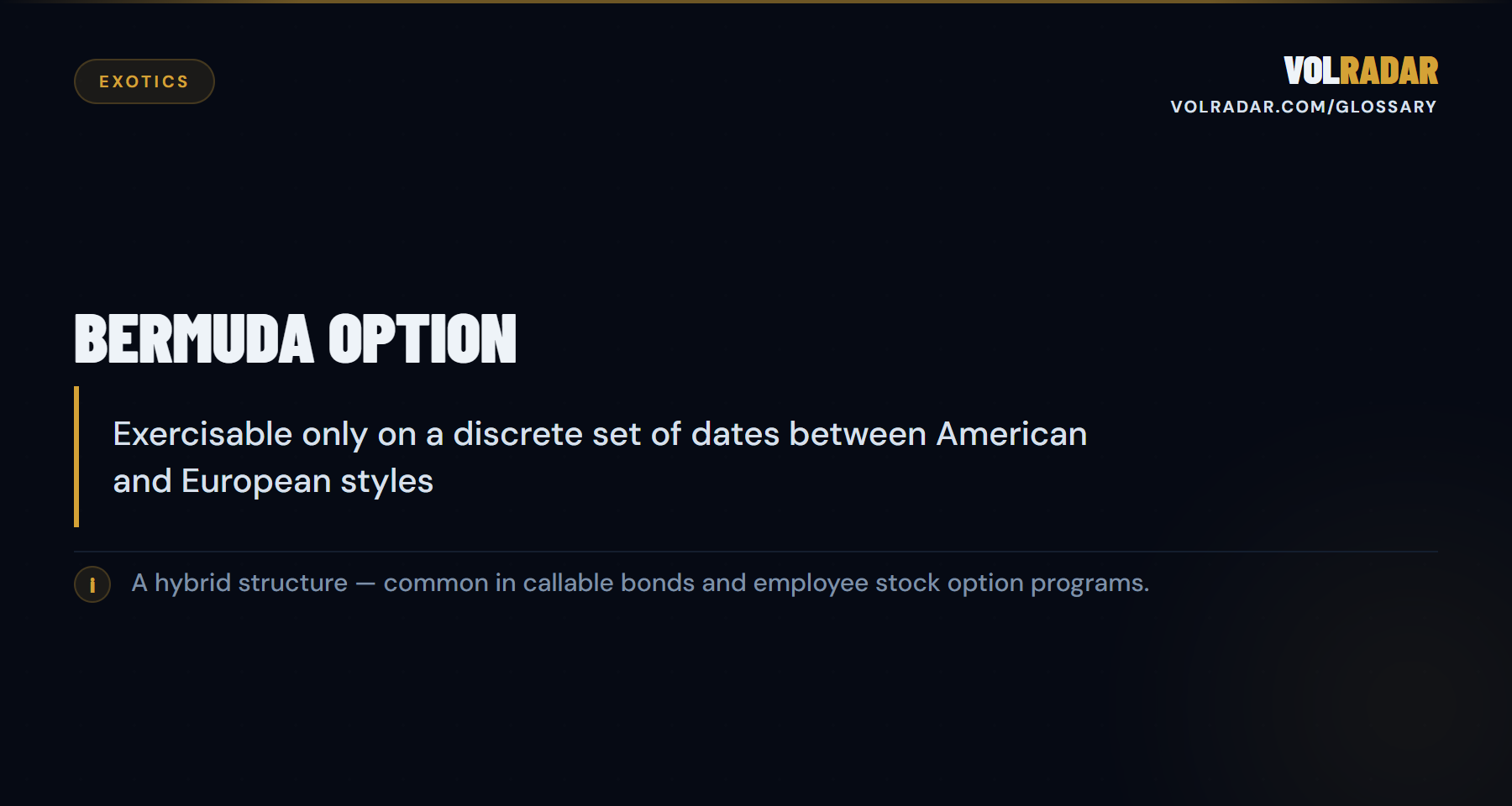
A Bermuda option can be exercised only on specific dates between the purchase date and expiration, not continuously like an American option or only at expiration like a European option. Common exercise windows are monthly or quarterly dates.
⚡
Key takeawayBermuda-style exercise windows mean early assignment risk is concentrated on specific dates rather than any day. This discrete exercise schedule is conceptually useful for understanding how LEAPS or calendar spreads behave near roll dates.
💡 Why It Matters
Bermuda-style exercise is relevant to premium sellers because many real-world options have informal Bermuda-like features. Short positions in LEAPS or long-dated options face early assignment primarily around ex-dividend dates, creating de facto discrete exercise windows.
⚙ How It Works
A Bermuda option specifies exact dates (e.g., the first of each month) on which exercise is permitted. Between these dates, the option cannot be exercised. Pricing falls between European (single exercise date) and American (continuous exercise), making them cheaper to buy than American options.
📋 Example
A Bermuda put with quarterly exercise dates (March, June, September, December) on a stock paying quarterly dividends aligns exercise windows with ex-dividend dates. The premium seller of this option faces assignment risk only four times per year rather than daily, making the risk more manageable.
⚠ Common Mistakes
Traders assume Bermuda options are rare and academic. In practice, many convertible bonds, callable bonds, and structured products embed Bermuda-style exercise features. Understanding Bermuda pricing helps when trading options on these underlying instruments.
❓ FAQ
What is Bermuda Option?
A Bermuda option can be exercised only on specific dates between the purchase date and expiration, not continuously like an American option or only at expiration like a European option. Common exercise windows are monthly or quarterly dates.
Why does Bermuda Option matter for premium sellers?
Bermuda-style exercise windows mean early assignment risk is concentrated on specific dates rather than any day. This discrete exercise schedule is conceptually useful for understanding how LEAPS or calendar spreads behave near roll dates.
How does Bermuda Option work?
A Bermuda option specifies exact dates (e.g., the first of each month) on which exercise is permitted. Between these dates, the option cannot be exercised. Pricing falls between European (single exercise date) and American (continuous exercise), making them cheaper to buy than American options.
What are common mistakes with Bermuda Option?
Traders assume Bermuda options are rare and academic. In practice, many convertible bonds, callable bonds, and structured products embed Bermuda-style exercise features. Understanding Bermuda pricing helps when trading options on these underlying instruments.
Related Terms
Asian Option
An exotic option whose payoff depends on the average price of the underlying over a specified period, not just the price at expiration.
Barrier Option
An exotic option that activates (knock-in) or deactivates (knock-out) when the underlying price hits a preset barrier level.
Basket Option
A basket option has a payoff determined by the weighted average price of multiple underlying assets rather than a single asset.
Binary Option
An option with a fixed all-or-nothing payout: if the underlying finishes past the strike at expiration, the holder receives a fixed amount (typically $100); ...
This is not financial advice. Read our full investment disclaimer.