
What is a bear call ladder?
A bear call ladder sells 1 OTM call and buys 2 higher-strike calls. It is the inverse of a bull call ladder. The short call collects premium. The two long calls at higher strikes provide protection against an extreme rally. The unusual risk profile has two profit zones: below the short call (stock stays flat/falls) and above both long calls (large rally). The loss zone is between the short call and the two long calls.
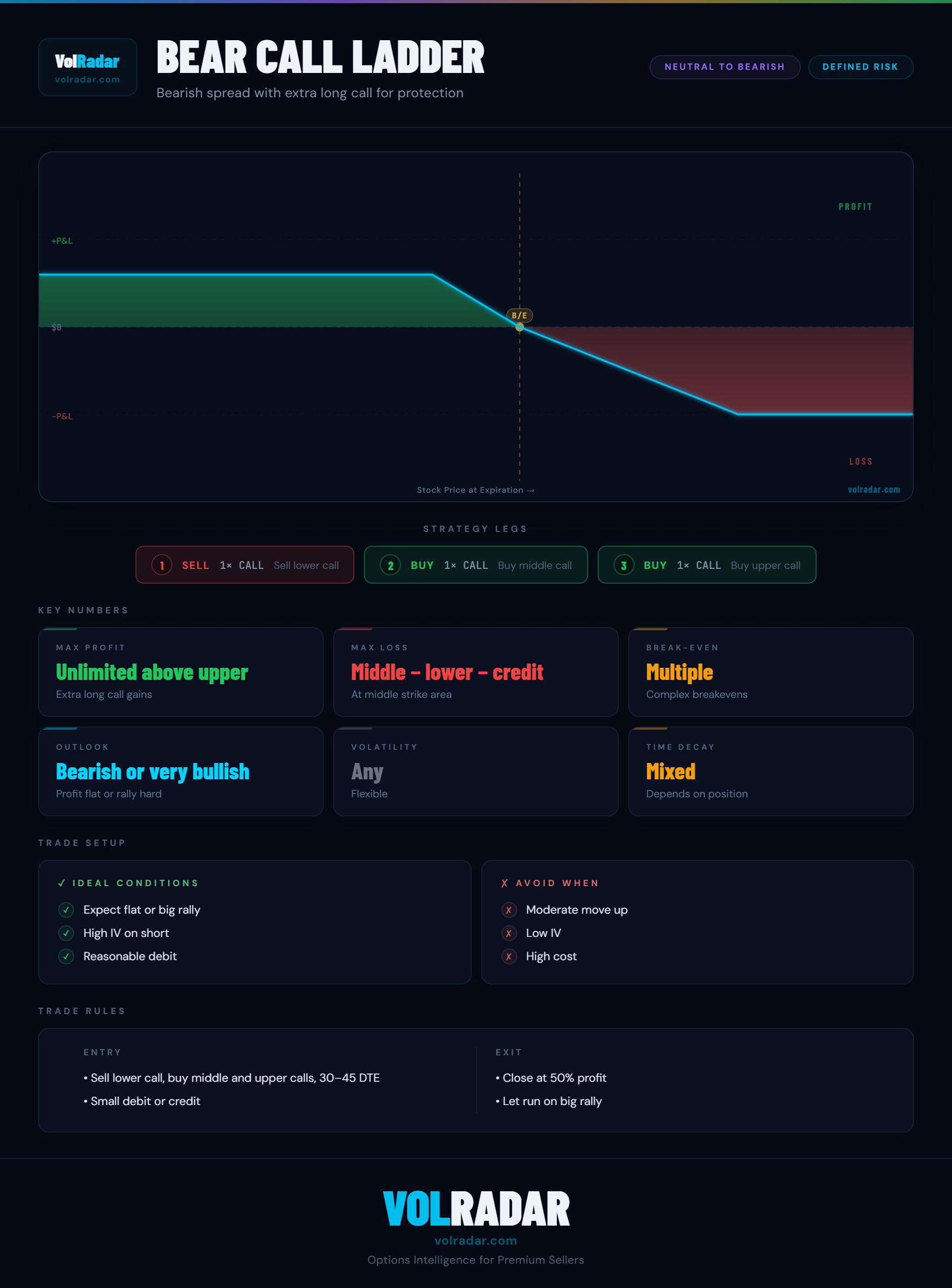
Bear call ladder risk profile
The unusual double-sided profit profile makes bear call ladders complex to manage. If the stock stays flat or falls, the short call expires worthless and you keep the premium. If the stock makes a very large rally (more than a 2σ move), it passes through the loss zone and into the upper profit zone. The dangerous scenario is a moderate rally — stock moves just into the loss zone and stays there.
When to use a bear call ladder
The bear call ladder is used in volatility-oriented strategies where you believe the stock will either stay flat or make a very large move. It is not a commonly used retail strategy due to its complex risk profile. Professional traders use it in situations where they expect a binary outcome — either no move or a massive move — and want to profit from both scenarios while funding the long calls with the short call premium.
Risk and management
Max loss is in the middle zone between the short and long calls. Size the position assuming the full middle zone loss is the maximum risk. Monitor the stock actively — if it rallies into the loss zone, take action immediately (close the short call or roll the position). The bear call ladder is not suitable for passive management strategies.