
What is a call ratio backspread?
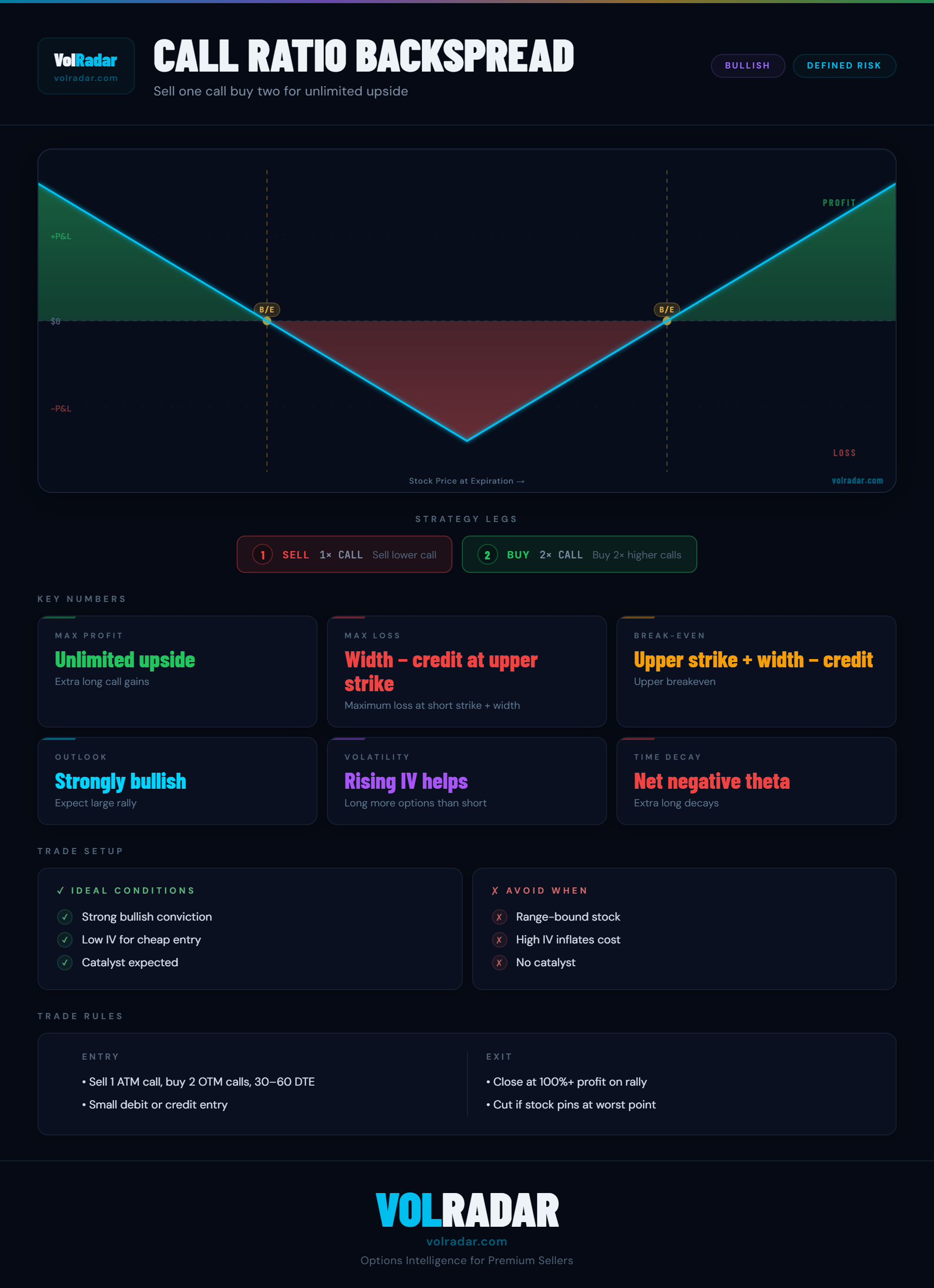
A call ratio backspread (also called a reverse call ratio spread) sells 1 call at a lower strike and buys 2 calls at a higher strike. The single short call is at a lower, more expensive strike; the 2 long calls are at a higher, cheaper strike. If entered at a credit, the position has no upfront cost. If the stock rallies strongly above both long call strikes, the 2 long calls generate twice the profit of the 1 short call loss.
Call ratio backspread vs long straddle
A long straddle profits from large moves in either direction (symmetric). A call ratio backspread profits specifically from a large upside move — with limited risk and often at zero cost or a credit. It is a superior structure to a long call for leveraged bullish plays: the short lower call reduces the net cost of the two long calls while adding only limited risk in the middle zone.
Risk profile and loss zone
If the stock falls, the short call expires worthless and you keep the credit (or the position is at net zero cost). The loss zone is when the stock rises just above the short strike but not far enough to reach profitability on the long calls — typically the loss is modest and bounded. The maximum loss is at the long call strike at expiration. Above the long call strikes, the 2 long calls dominate and profits are unlimited.
When to use a call ratio backspread
Use when you expect a large upside move but want to enter at low or zero cost. The backspread is particularly attractive when IV skew makes lower-strike calls expensive relative to higher-strike calls — allowing you to sell the expensive lower call and use the proceeds to buy 2 cheaper higher calls. Earnings plays with upside bias are a common use case.