
What is a put ratio backspread?
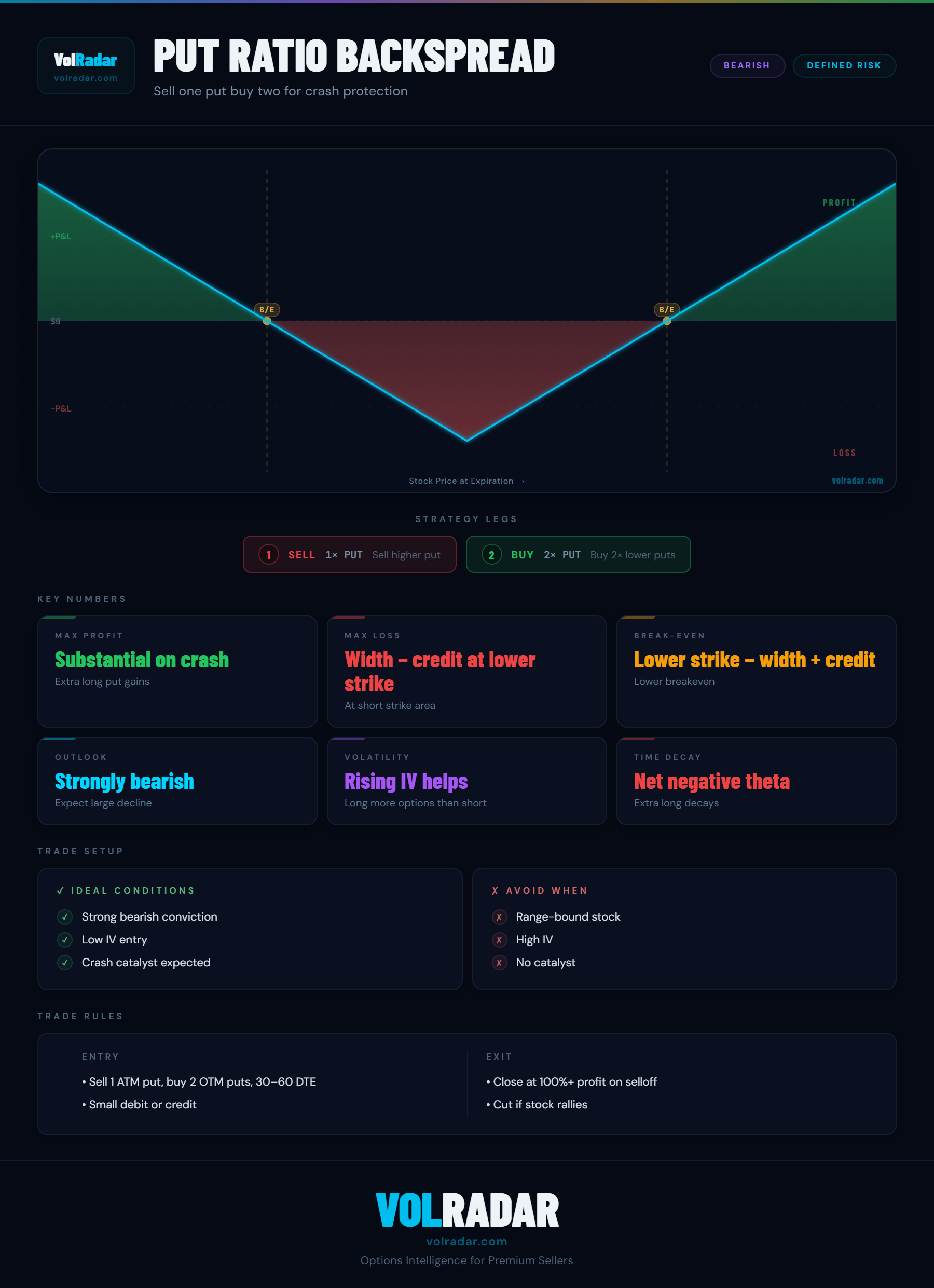
A put ratio backspread sells 1 put at a higher strike and buys 2 puts at a lower strike. The single short higher-strike put is more expensive; the 2 long lower-strike puts are cheaper but provide 2× exposure to a large decline. If the stock falls sharply below both long put strikes, the 2 long puts gain more value than the 1 short put loses — creating accelerating profit on large downward moves.
Why backspreads are attractive
The put backspread can often be entered at a credit or zero cost, making it a "free" bearish trade. If the stock stays flat or rises, the short put expires worthless and you keep the credit (or break even). The only cost is in the middle loss zone. But if the stock crashes, the 2 long puts generate significant profit. This asymmetry — free entry with large bearish profit potential — makes backspreads popular for tail risk hedging.
Loss zone mechanics
The loss zone exists between the short put and the long put strikes. If the stock falls moderately (to the long put strikes but not beyond), the position is at maximum loss. This loss is bounded — it cannot exceed the distance between the strikes minus any credit received. Think of it as paying an "insurance premium" in the middle zone to receive protection on large crashes.
When to use a put ratio backspread
Use for tail risk hedging when you want crash protection without paying a large premium. The backspread is also used in bearish directional plays when you expect a large move. High put skew markets are ideal — elevated put skew makes the single short higher-strike put collect more premium, improving the credit and making the structure cheaper or free to enter.