
What is a put ratio spread?
A put ratio spread (1×2) buys 1 put at a higher strike and sells 2 puts at a lower strike. The two short puts generate more premium than the single long put costs — potentially creating a net credit. Maximum profit is achieved when the stock falls to the short put strikes at expiration. Below the short strikes, the extra (uncovered) short put creates escalating losses.
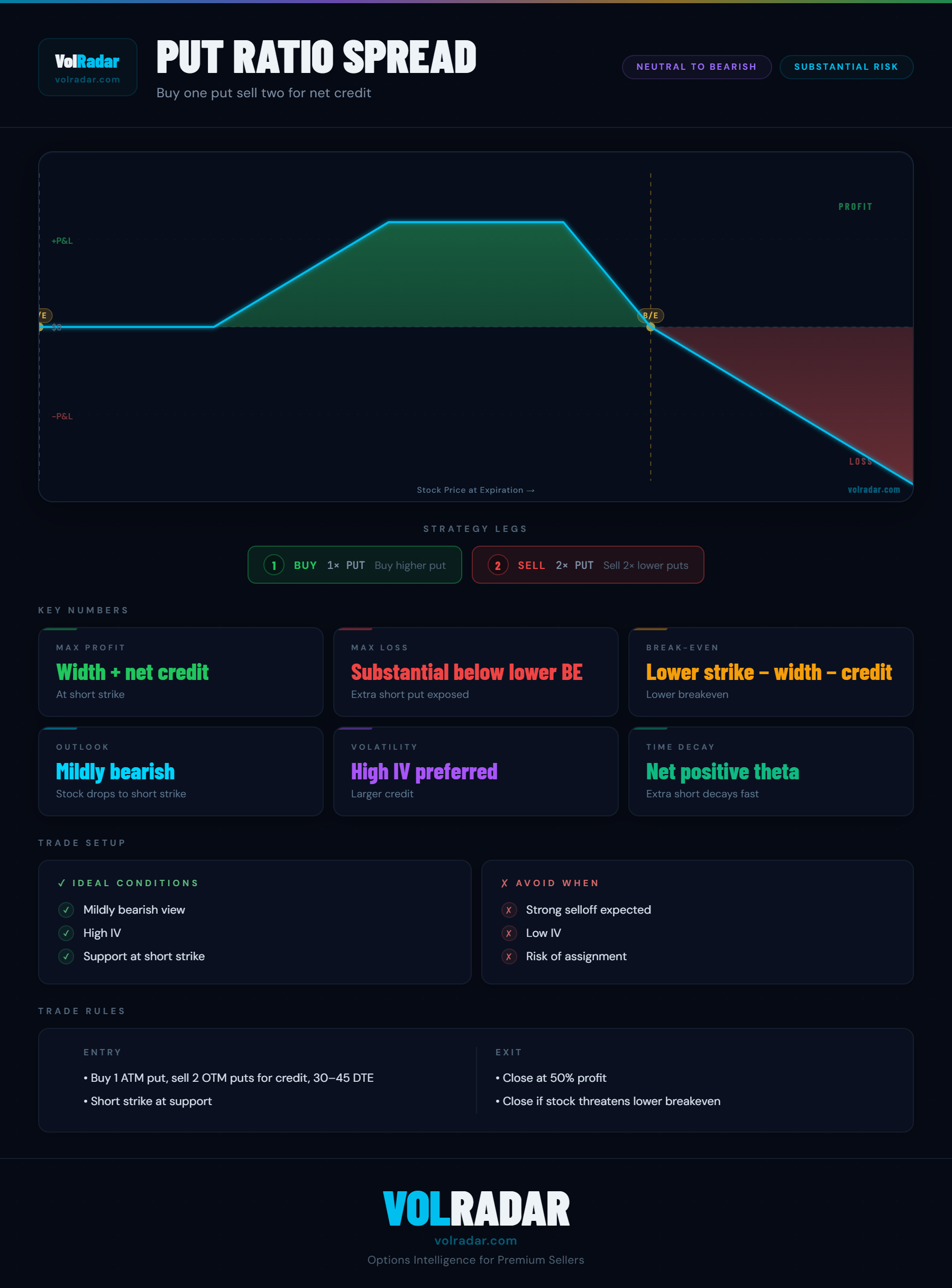
Put ratio spread vs bear put spread
A bear put spread buys 1 put and sells 1 put — fully defined risk. A put ratio spread sells 2 puts against 1 long put — higher credit but 1 uncovered short put with downside risk. The put ratio spread is chosen when you want to generate maximum income from a moderately bearish view, with strong support below the short strike preventing a sharp decline.
Risk of the extra short put
If the stock crashes below both short put strikes, the uncovered short put creates substantial losses. A stock falling 20–30% (not uncommon in high-IV environments or market crashes) can result in losses far exceeding the credit collected. Always have a stop-loss plan at the short put strike level. Converting to a bear put spread (buying back one of the short puts) caps the risk at any time.
When to use a put ratio spread
Use in high IV environments where put skew is elevated — the two short puts collect substantial premium. The stock should have strong support below the short strike. Avoid before earnings or in rapidly declining markets. Put ratio spreads are used by professional traders and require active monitoring. For most retail traders, the bear put spread or bull put spread are safer alternatives.