
What is a bear put ladder?
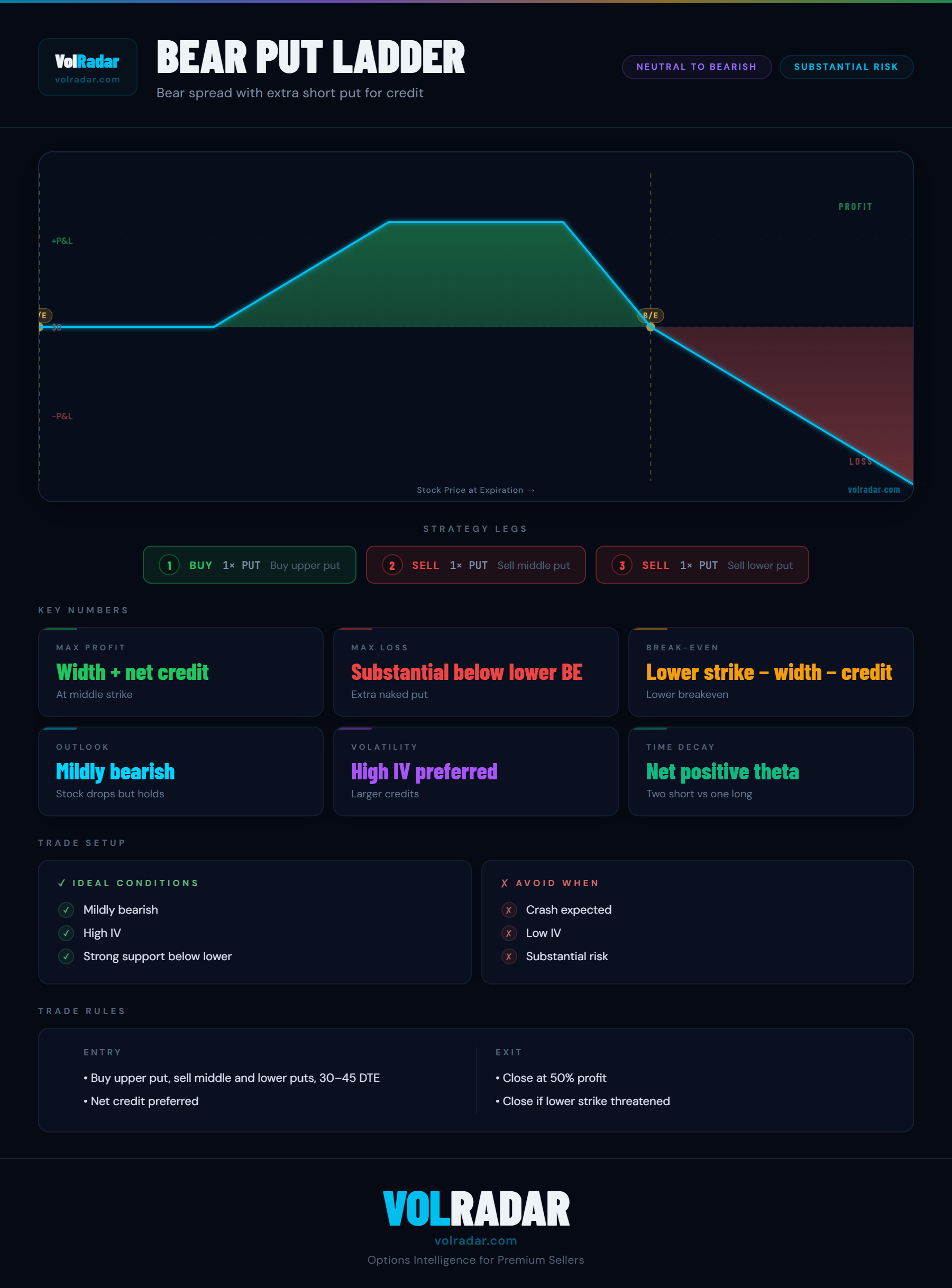
A bear put ladder buys 1 put at the highest strike and sells 2 puts at progressively lower strikes. It can be entered at a credit. The position profits if the stock falls to the range of the short puts. If the stock falls sharply below both short strikes, the two unhedged short puts create escalating losses — similar to the undefined risk of the bull call ladder on the upside. The strategy requires active management.
Bear put ladder vs bear put spread
A bear put spread buys 1 put and sells 1 put — fully defined risk. A bear put ladder sells an additional put, collecting more credit but adding downside risk. In moderate bearish scenarios where the stock falls to a specific range and stabilizes, the ladder outperforms. In crash scenarios, the extra short put causes significant losses. The defined-risk bear put spread is almost always preferable for retail traders.
Risk management is critical
Monitor the position if the stock moves toward and through the lower short put strikes. Buy back one of the short puts immediately to limit exposure if the stock is falling sharply. Alternatively, set a hard stop at the lower short put strike before entering. Never hold a bear put ladder passively — the undefined risk below the lower strikes can result in losses far exceeding the premium collected.
When to use a bear put ladder
The bear put ladder is used when you are moderately bearish and want to generate a credit while gaining directional exposure. It is appropriate when the stock has strong support below the lower short puts (reducing the probability of a catastrophic decline). The strategy works best when IV is high (making the sold puts rich) and you have a specific target price range for the decline.