
What is a bull put ladder?
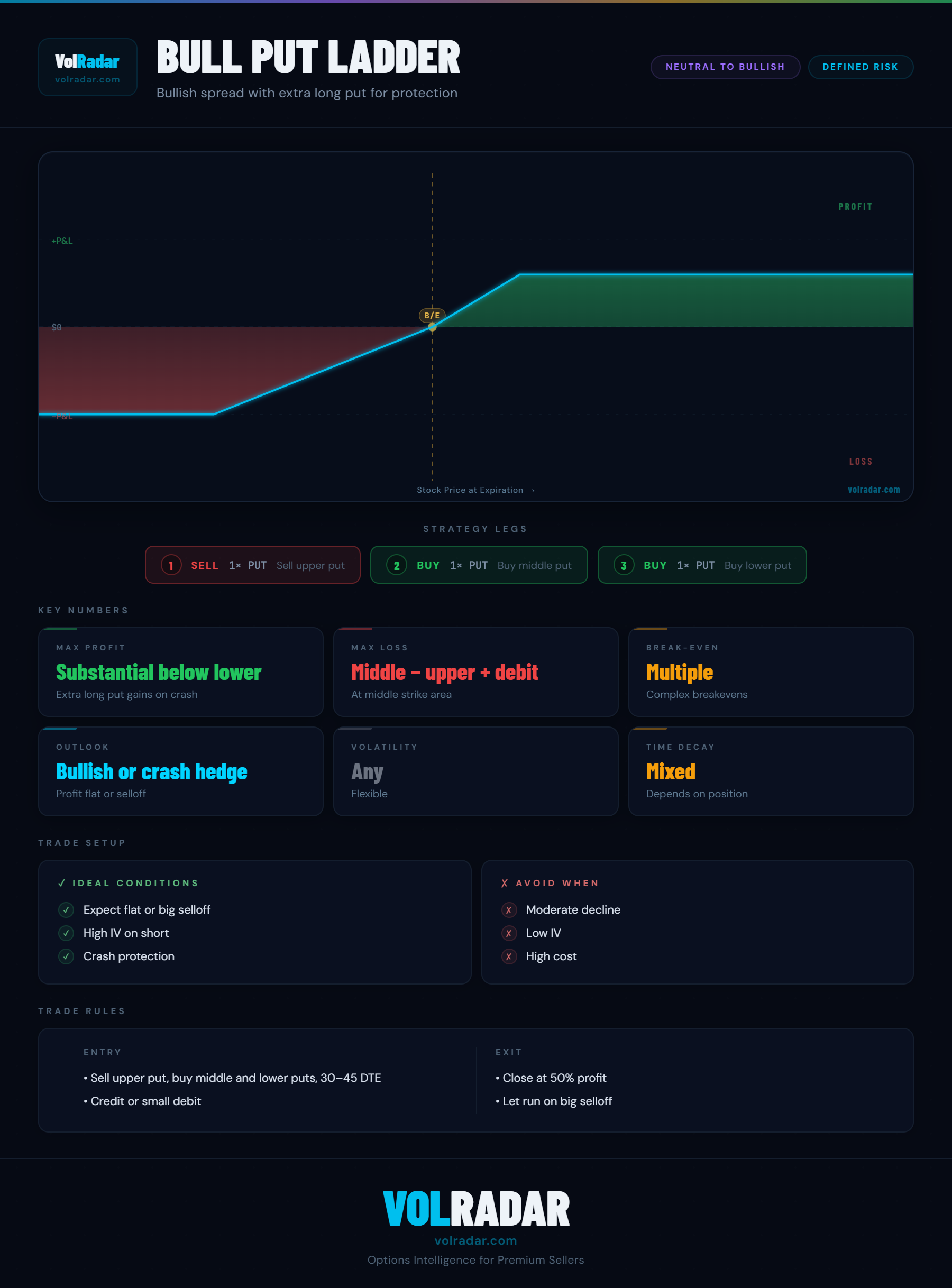
A bull put ladder sells 1 OTM put at a higher strike and buys 2 puts at lower strikes. The premium from the short put (partly) funds the two long puts. The profit profile has two zones: above the short put (stock stays flat or rises) and far below the long puts (very large decline). In between, the position loses. This unusual structure is used by traders who expect stability or an extreme downward move.
Bull put ladder vs bear put spread
A bear put spread has a simple linear profit profile — profit increases as the stock falls. The bull put ladder has a more complex profile — it profits when the stock stays flat and also profits on a very large decline, but loses on a moderate decline. The bull put ladder is appropriate in specific situations; the bear put spread is more straightforward for directional bearish bets.
Risk and management
The maximum loss is in the zone between the short put and the long puts. This zone needs active monitoring. If the stock drops into the loss zone, close or adjust the position quickly. The bull put ladder is not suitable for passive holding strategies. Before entering, clearly define the maximum acceptable loss at the deepest point of the loss zone and use that as your position sizing guide.
When to use it
Bull put ladders are used when premium is very high on the short put (making the trade entry near-zero cost or a credit) and you have conviction that the stock will either stay above the short put OR make a dramatic move below all the long puts. They are uncommon in retail trading but appear in institutional volatility books where the unusual risk profile fits a specific hedging need.