
What is a calendar put spread?
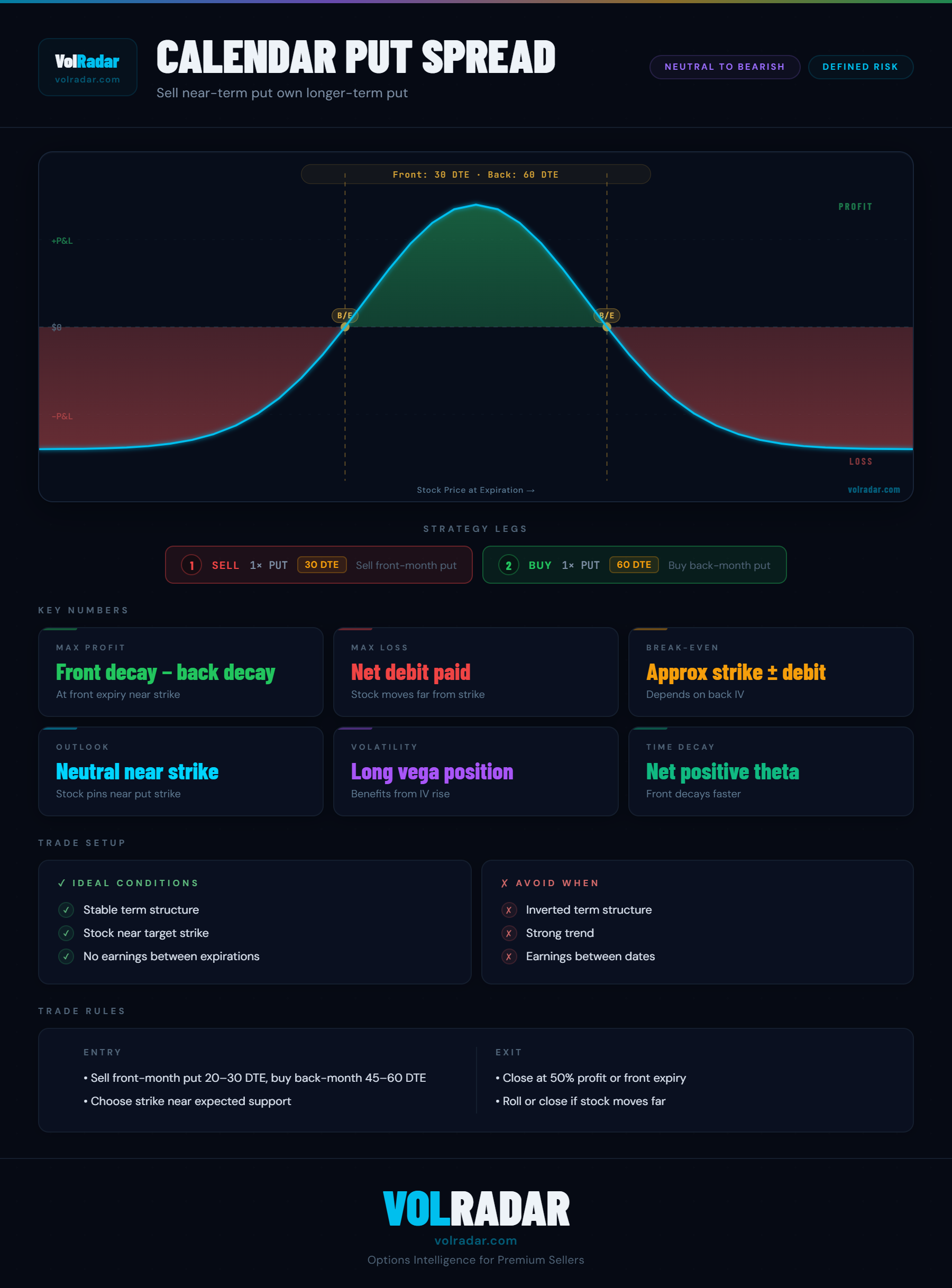
A calendar put spread sells 1 near-term put and buys 1 longer-dated put at the same strike. The short put decays faster, and at front-month expiration the back-month put retains substantial time value. Like a call calendar, maximum profit occurs when the stock is near the strike at the short option expiration. Put calendars are particularly useful for bearish-centered setups below the current stock price.
When to choose a put calendar over a call calendar
In normal market conditions, put skew makes puts more expensive than equivalent calls. This means a put calendar at a given strike may cost more than a call calendar at the same strike. However, when put skew is relatively flat (unusual) or when you want to place the calendar below the current stock price where put options are more liquid, a put calendar is preferred. Always compare debit of both structures before entering.
Setup and management
Sell the front-month put at the target strike. Buy the back-month put at the same strike (2–4 weeks later). Net debit is the maximum risk. Manage at 50% profit or roll the front-month put when it reaches 7–10 DTE. If the stock moves sharply away from the strike, close the position early as the spread collapses in value. After front-month expiry, close or sell a new put against the remaining long put.
Double calendar strategy
A double calendar combines a call calendar above the current price and a put calendar below — creating a wider profit zone similar to an iron condor but with the added back-month protection. The double calendar has two profit peaks (one at each strike) and two expiration dates to manage. It is a more complex structure suitable for experienced traders looking to capture time decay across a range with residual long vega exposure.