
What is a calendar spread?
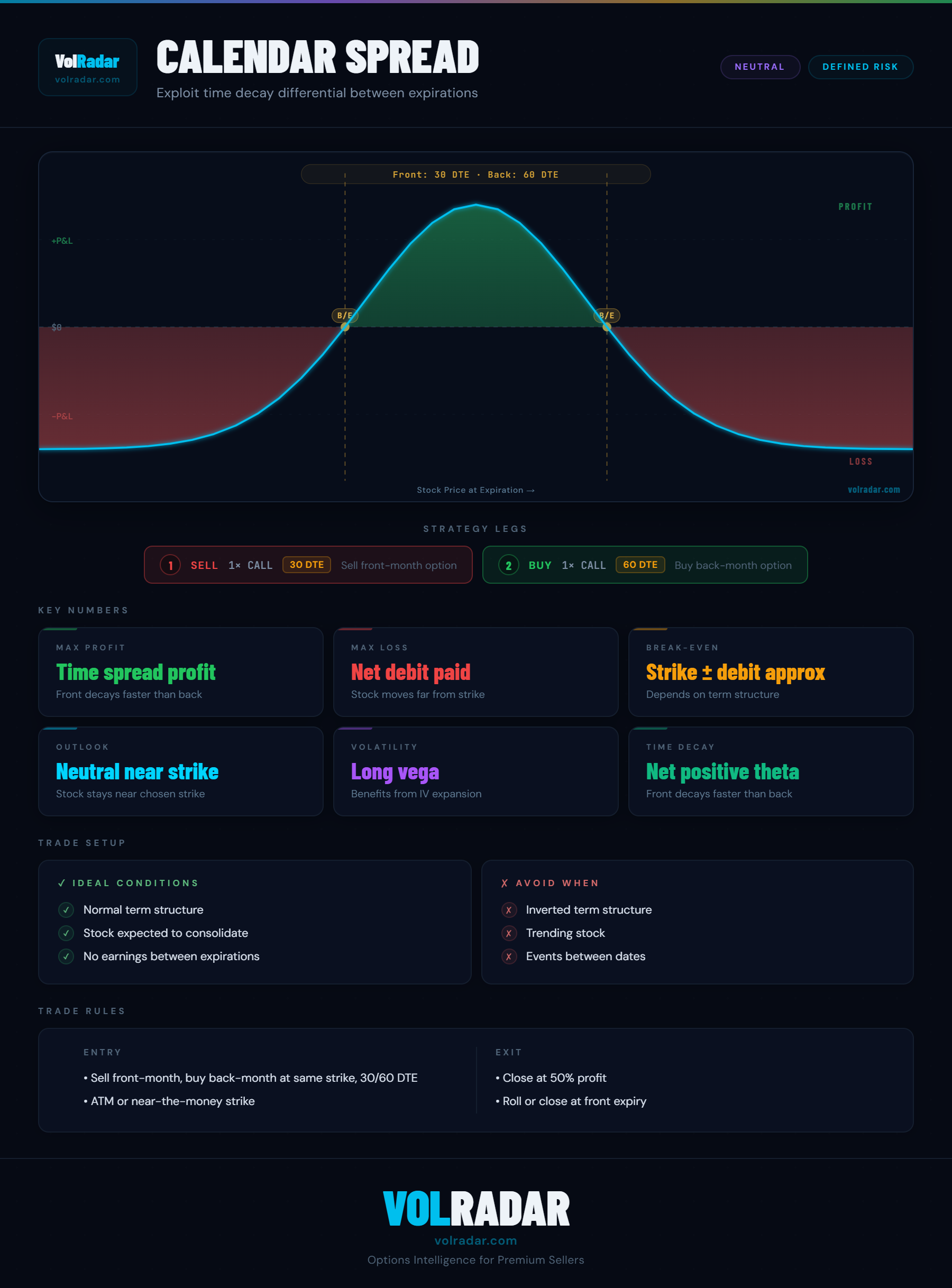
A calendar spread (also called a time spread or horizontal spread) buys a longer-dated option and sells a shorter-dated option at the same strike. Because the short option decays faster than the long option, the position benefits from time passing. A call calendar spread uses calls; a put calendar spread uses puts. The position is typically delta-neutral at entry and profits from the stock staying near the chosen strike.
Calendar spread mechanics
Sell 1 option with 20–30 DTE and buy 1 option with 45–60 DTE at the same strike. The net debit is typically small because the premiums partially offset. As the short option approaches expiration, it decays faster than the long option — this differential decay is the profit engine. At front-month expiration, the ideal scenario is the stock pinning near the short strike, where the long option still retains significant time value.
IV and calendar spreads
Calendar spreads are long vega — they benefit from rising implied volatility. If IV expands after entry (a volatility spike), the long option gains more value than the short option, accelerating profit. This is different from most premium selling strategies that are short vega. A calendar spread entered before a known volatility event (earnings on the back month) can profit from IV expansion, but timing is critical.
Risk and management
Max loss for a calendar spread is the net debit paid — the position cannot lose more than its cost. If the stock moves far away from the strike in either direction, both options lose extrinsic value and the spread collapses toward zero. Close the position when the short leg expires or when the trade reaches 50% profit. Rolling the short leg to the next month after expiration is how some traders maintain the position over multiple cycles.