
What is a diagonal spread?
A diagonal spread uses two options at different strikes AND different expirations — unlike a calendar spread (same strike, different expiration) or a vertical spread (same expiration, different strikes). A bullish diagonal spread (Poor Man's Covered Call) buys a deep ITM call with a long expiration (LEAPS) and sells OTM calls against it each month. This creates covered call income without owning the full stock position.
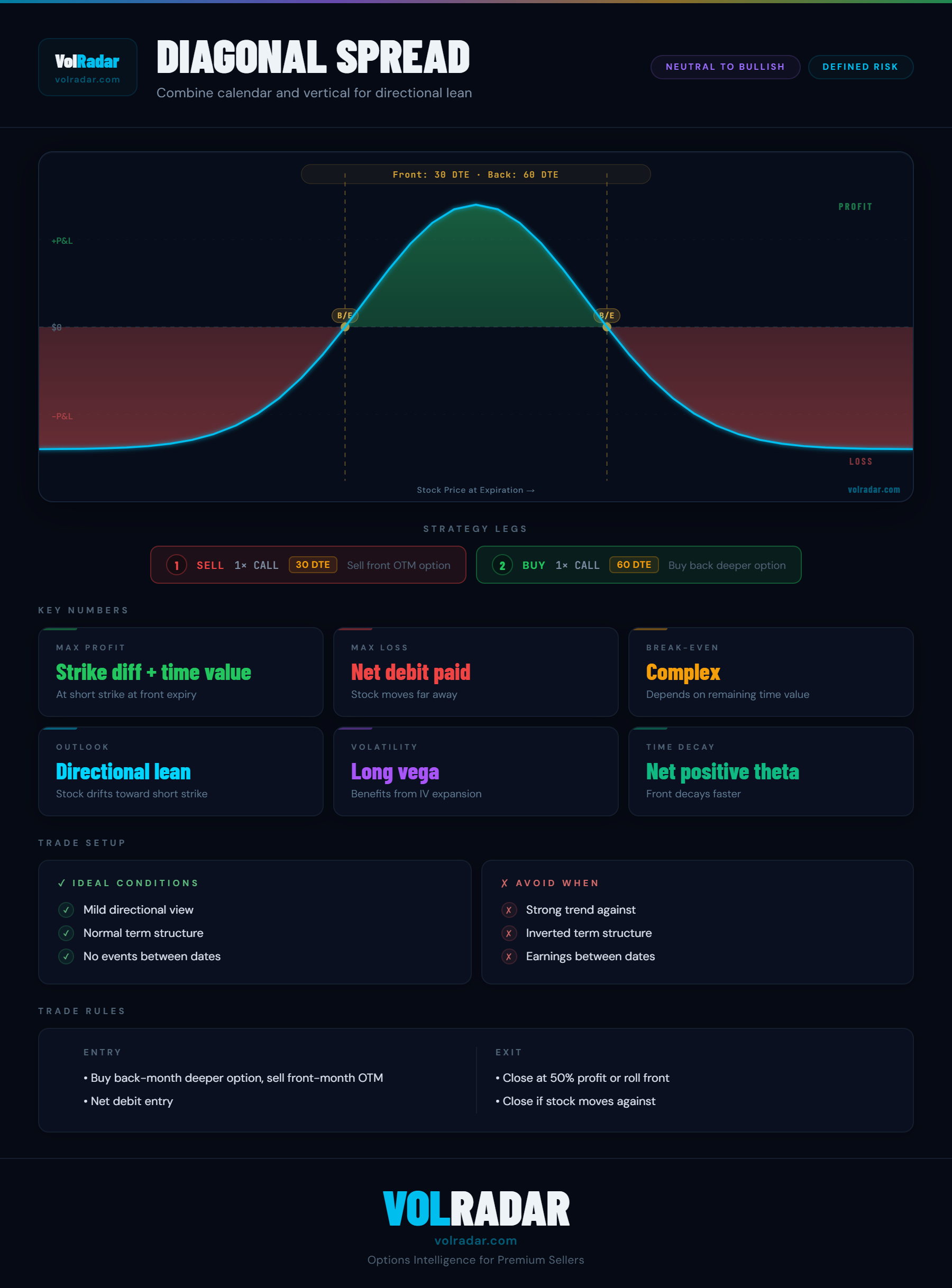
Poor Man's Covered Call setup
Buy a call with 80+ delta and 6–12 months to expiration (acts as a stock substitute). Sell a call at the 30–40 delta strike with 30–45 DTE. Roll the short call each month as it expires, collecting ongoing premium income. The long LEAPS call should cost less than the equivalent 100 shares. Max profit at expiration of the short call occurs if the stock rises to the short strike.
Diagonal spread vs covered call
A covered call requires owning 100 shares (full capital outlay). A Poor Man's Covered Call uses a deep ITM LEAPS call as a proxy for shares — the capital required is dramatically lower (typically 25–40% of the equivalent stock position). The LEAPS acts like owning the stock for directional purposes. The key risk: if the stock drops sharply, the LEAPS loses value just like the stock, and can expire worthless if the decline is large enough.
Risk and management
Max loss is the net debit paid for the LEAPS (if stock falls to zero). Short leg profits or losses based on strike selection each cycle. Roll the short call monthly before expiration. If the stock rises above the short call strike, buy back the short call and sell a new one at a higher strike. Close the full position if the LEAPS has doubled in value or if the thesis changes.