
What is a covered call?
A covered call is an options strategy where you sell a call option against 100 shares of stock you already own. By selling the call, you collect premium income upfront. The "covered" part means your obligation is backed by the shares you hold — unlike a naked call, your risk is limited. Covered calls are one of the most beginner-friendly options strategies and are approved in most brokerage accounts.
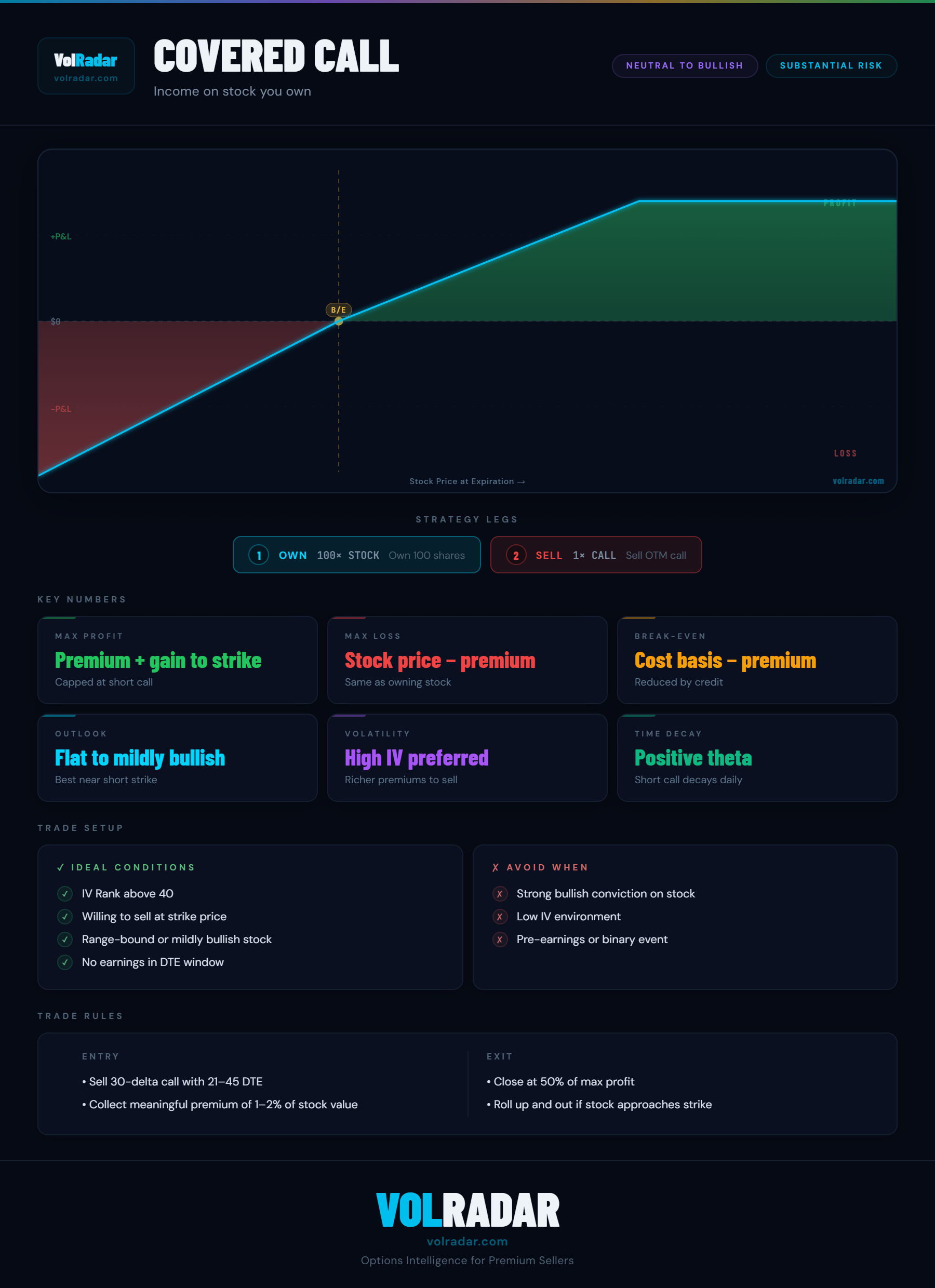
How to set up a covered call
To execute a covered call: own 100 shares of the underlying stock, then sell 1 call option at an out-of-the-money strike with 21–45 days to expiration. The strike you choose determines your cap on stock gains. A 30-delta call balances premium collection with room for the stock to appreciate. The premium collected lowers your effective cost basis on the shares.
When to use a covered call
Covered calls work best when you expect the stock to stay flat or move slightly higher — not rally strongly. High IV Rank means richer premiums, making it an ideal time to sell. Avoid selling covered calls before earnings if you want to keep your shares — a large post-earnings move can push the stock far through your strike. Use VolRadar to check IV Rank before selecting your strike.
Risk and reward
Max profit equals the premium collected plus any stock appreciation up to the strike price. Max loss is the same as owning the stock outright minus the premium collected — you are still long the shares. The key risk is opportunity cost: if the stock rallies sharply above your strike, your gains are capped. The covered call is not a hedge — it reduces your cost basis but does not protect against a significant decline.