
What is a calendar call spread?
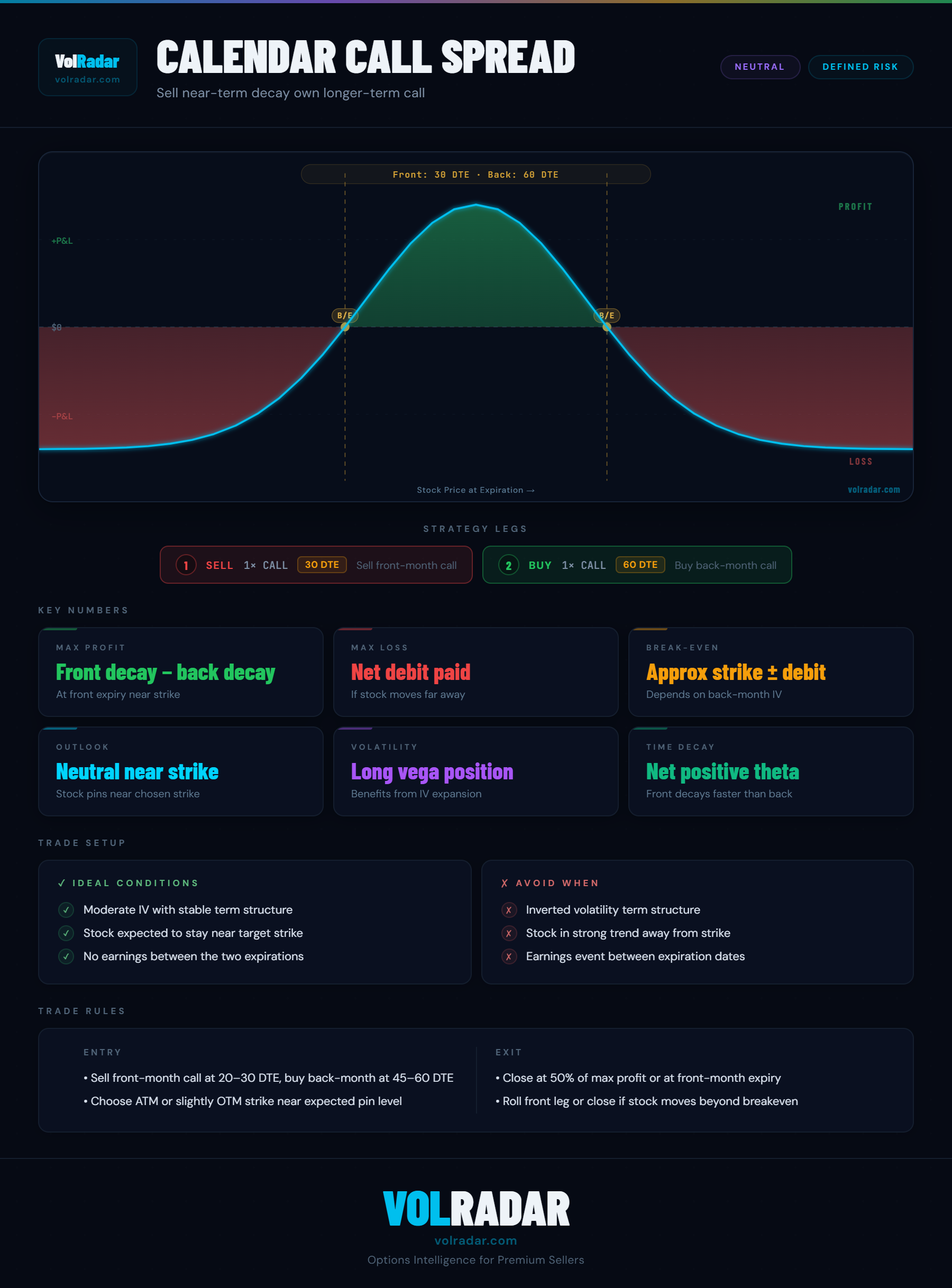
A calendar call spread (or horizontal call spread) sells 1 call at a specific strike with a near-term expiration and buys 1 call at the same strike with a later expiration. The net cost is the debit between the two premiums. As the near-term call decays rapidly, the long back-month call retains more time value — the spread widens in your favor. Maximum profit at the front-month expiration occurs when the stock pins near the strike.
Calendar call vs calendar put spread
Calendar call and calendar put spreads at the same strike have nearly identical risk profiles due to put-call parity. The choice between them depends on pricing. In high put skew environments, call calendars may be cheaper. Both profit from the same mechanism: front-month time decay exceeding back-month decay. Calls are typically used for ATM or slightly OTM calendars above the current price; puts for calendars below.
Setup and management
Sell the front-month call at the target strike (20–30 DTE). Buy the back-month call at the same strike (45–60 DTE). Net debit is the maximum risk. Close or roll when the front-month option expires or when the position reaches 50% of max profit. After front-month expiry, you hold a naked long call — close or sell a new near-term call against it to convert to another calendar cycle.
Risk and IV considerations
Max risk is the net debit paid. Calendar spreads are long vega — they benefit from rising implied volatility. If IV drops after entry, both options lose value but the long back-month option loses more proportionally, hurting the position. Enter calendar spreads when IV is moderate to low and likely to stay stable or increase slightly. Avoid before earnings if both expirations straddle the event.