
What is a double diagonal?
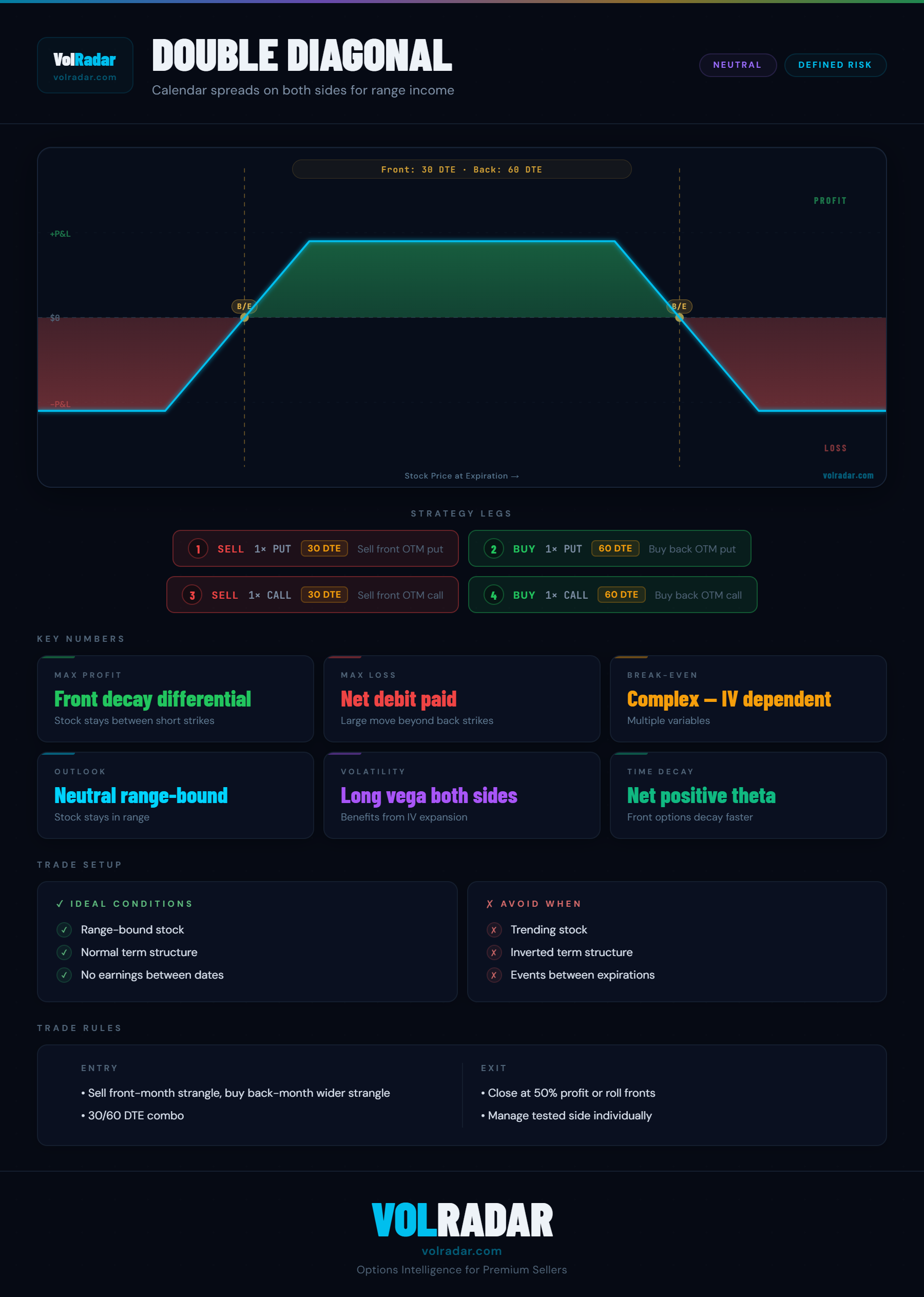
A double diagonal combines two diagonal spreads: a call diagonal (sell a near-term OTM call, buy a longer-term OTM call at a higher strike) and a put diagonal (sell a near-term OTM put, buy a longer-term OTM put at a lower strike). The short legs are the same expiration; the long legs are the same, later expiration. You collect a net credit from the short options while the long options provide protection with more remaining time value.
Double diagonal vs iron condor
An iron condor uses all four legs at the same expiration — the long wings expire at the same time as the short options. A double diagonal puts the long wings at a later expiration, so they retain more time value when the short options expire. This means the long wings can be sold for additional credit after the short legs expire — potentially running multiple short cycles against a single set of long wings.
When to use a double diagonal
Double diagonals work best in range-bound markets with elevated near-term IV — you want rich premiums for the short options and cheaper long protection. The position benefits from a slight volatility increase in the long options after entry (long vega on the back-month legs). It is appropriate for experienced traders who can manage the two-expiration structure and roll the short legs efficiently.
Risk and management
Net risk is the debit paid (typically small or near zero). If the stock breaches the short strike, the long wing in the later expiration provides protection — but because it is at a later expiration, it retains more value than an equivalent iron condor wing, reducing the loss. Manage the short options at 50% profit and roll or close the long wings separately. The double diagonal requires more active management than an iron condor.