
What is a long put?
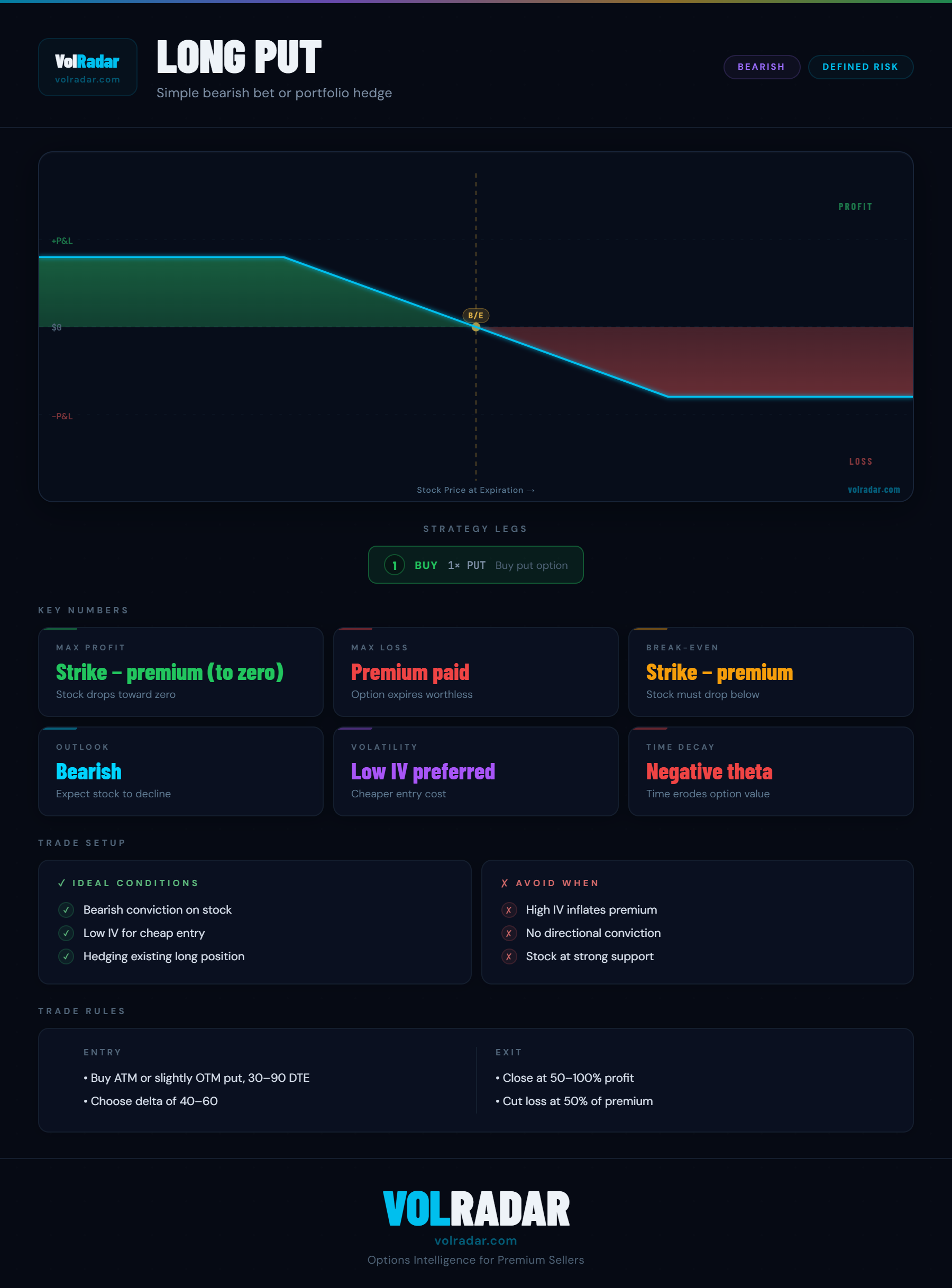
A long put option gives the buyer the right to sell 100 shares at the strike price before expiration. If the stock falls below the breakeven (strike minus premium paid), the put gains value. If the stock stays flat or rises, the put loses value and may expire worthless — limiting the loss to the premium paid. Long puts are used for directional bearish trades and for hedging existing stock positions.
Long put as a hedge (protective put)
When bought against an existing long stock position, a long put becomes a protective put — effectively creating a price floor. If the stock falls sharply, the put gains value, offsetting stock losses. This is portfolio insurance. The cost of the put is the insurance premium. Buying puts on individual positions or on ETFs (SPY puts) is one of the most common institutional hedging strategies.
When to buy puts
Long puts are most effective when IV Rank is low (cheap options), you expect a sharp directional move down, or you need to hedge an existing position quickly. Buying puts in high IV environments is expensive — the implied volatility priced in may already reflect the risk you are hedging. For cost-efficient bearish directional trades, consider the bear put spread (debit spread) which reduces the net cost.
Risk and time decay
Max loss is the premium paid. Max profit is the strike price minus the premium (stock can only go to zero). Time decay erodes the value of long puts daily — avoid holding long puts through slow, grinding moves where time decay exceeds directional gains. Close when target profit is reached or at 50% loss if the thesis is wrong. Long puts have the same theta decay risk as long calls.