
What is a protective put?
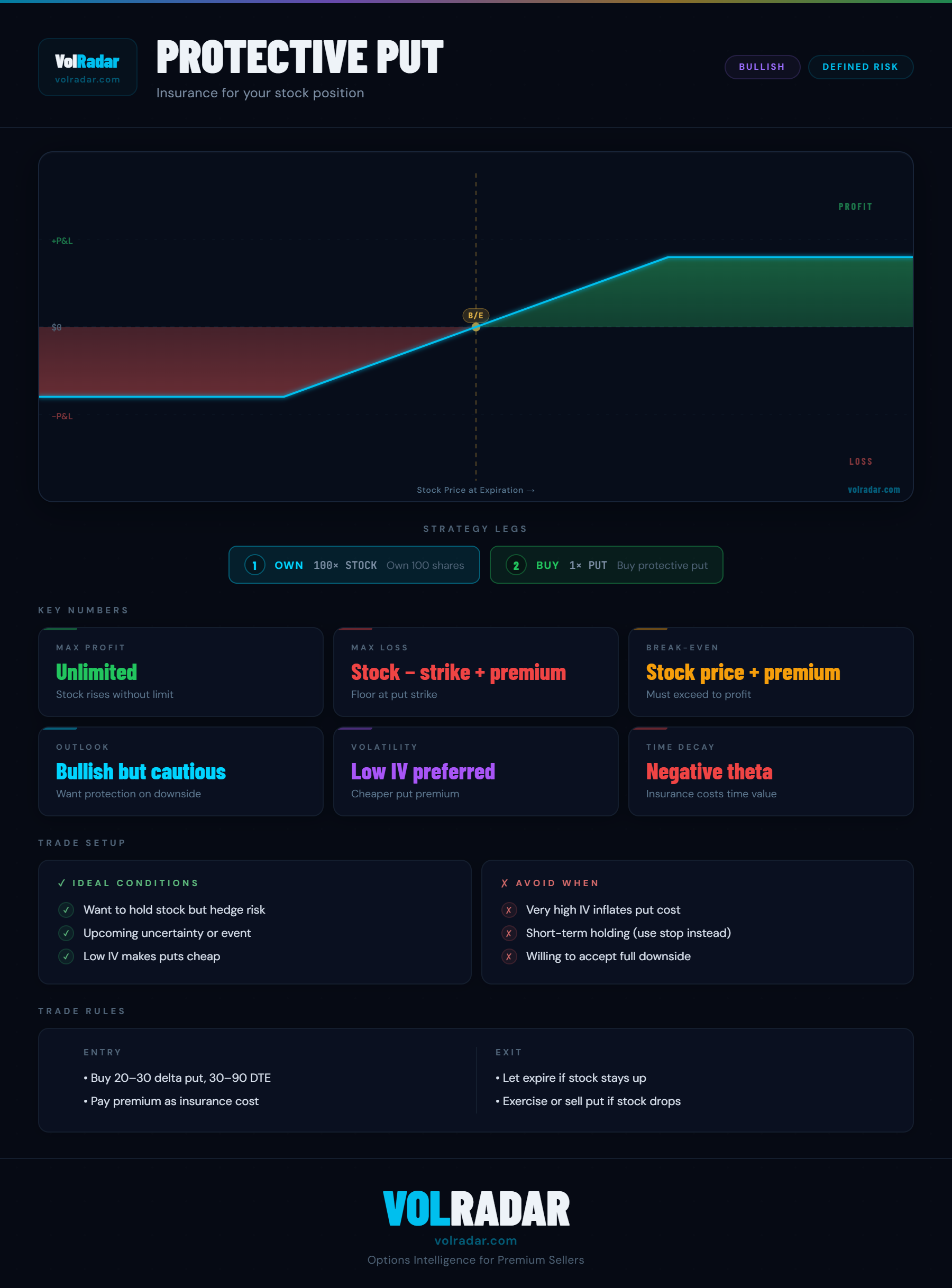
A protective put combines owning 100 shares of stock with buying 1 put option at or below the current price. If the stock falls sharply, the put gains value — offsetting the stock loss below the strike. Above the put strike, the put expires worthless (or is sold) and the stock appreciation is fully captured. The strategy is also called a married put when the put is purchased at the same time as the stock.
How to set up a protective put
Own 100 shares of the stock. Buy 1 put option — choose a strike based on how much downside you are willing to accept. An ATM put (at the current price) provides maximum protection but costs the most. A 10–15% OTM put is cheaper and covers catastrophic losses only. The put expiration should match your hedging horizon — 30–90 days is typical for tactical hedges.
Protective put vs covered call
A protective put costs money (debit) and protects against downside. A covered call generates income (credit) but caps the upside. Combining both creates a collar — a zero-cost (or near zero-cost) hedge that limits both upside and downside. If you own a stock and want protection without spending extra, selling a covered call can fund the cost of the protective put.
Cost and trade-offs
The put premium reduces the effective return on the stock position. If the stock stays flat or rises, the put expires worthless and you lose the premium. The key question is whether the insurance cost is worth the peace of mind. For long-term holdings, rolling protective puts quarterly can become expensive — many investors prefer to sell covered calls to offset the cost rather than continuously buying puts.