
What is a collar?
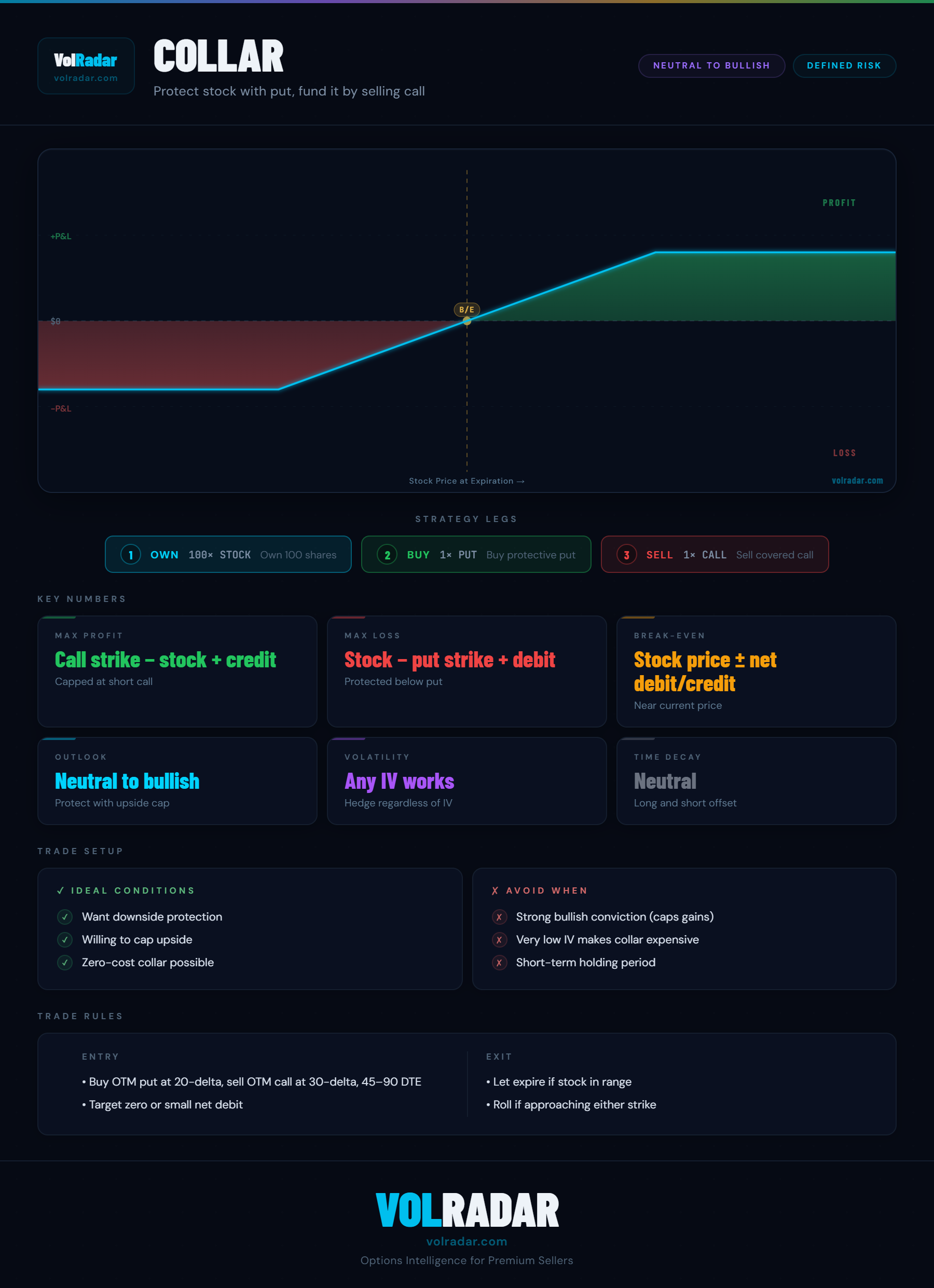
A collar strategy combines three positions: long 100 shares of stock, short 1 call option above the current price (covered call), and long 1 put option below the current price (protective put). The short call generates premium income that offsets the cost of the put. The result is a stock position with both a ceiling (short call strike) and a floor (long put strike). Between those two strikes, profit and loss track the stock.
How to set up a collar
Own 100 shares. Sell a covered call 5–10% above the current price (15–25 delta). Buy a protective put 5–10% below the current price (15–25 delta). Adjust the strikes so the premium collected from the call approximately equals the put cost — this creates a zero-cost collar. The tradeoff: you give up upside gains above the call strike to fund downside protection below the put strike.
When to use a collar
Collars are ideal when you have a large gain in a stock position and want to protect profits without selling (avoiding taxes, for example). They are also used by executives with concentrated stock positions who cannot sell shares. The collar is most effective when IV is elevated — the covered call collects more premium, allowing a lower put strike for the same cost. Check IV Rank before setting up a collar.
Zero-cost collar vs paid collar
A zero-cost collar uses equal premium strikes so the net debit or credit is zero. A paid collar uses a wider put strike (more protection) at the cost of spending net premium. Choosing between them depends on how much downside protection you need vs. how much upside you are willing to sacrifice. Most retail hedgers use near-zero-cost collars to balance protection and cost.