
What is a call broken wing butterfly?
A standard call butterfly has equally spaced wings (e.g., $5 between each strike). A broken wing butterfly deliberately makes one wing wider than the other. A call broken wing typically moves the upper long call to a higher strike — for example: buy the $95 call, sell 2 $100 calls, buy the $110 call (instead of $105). The wider upper wing costs less to buy, potentially turning the structure into a credit. The downside risk becomes one-sided.
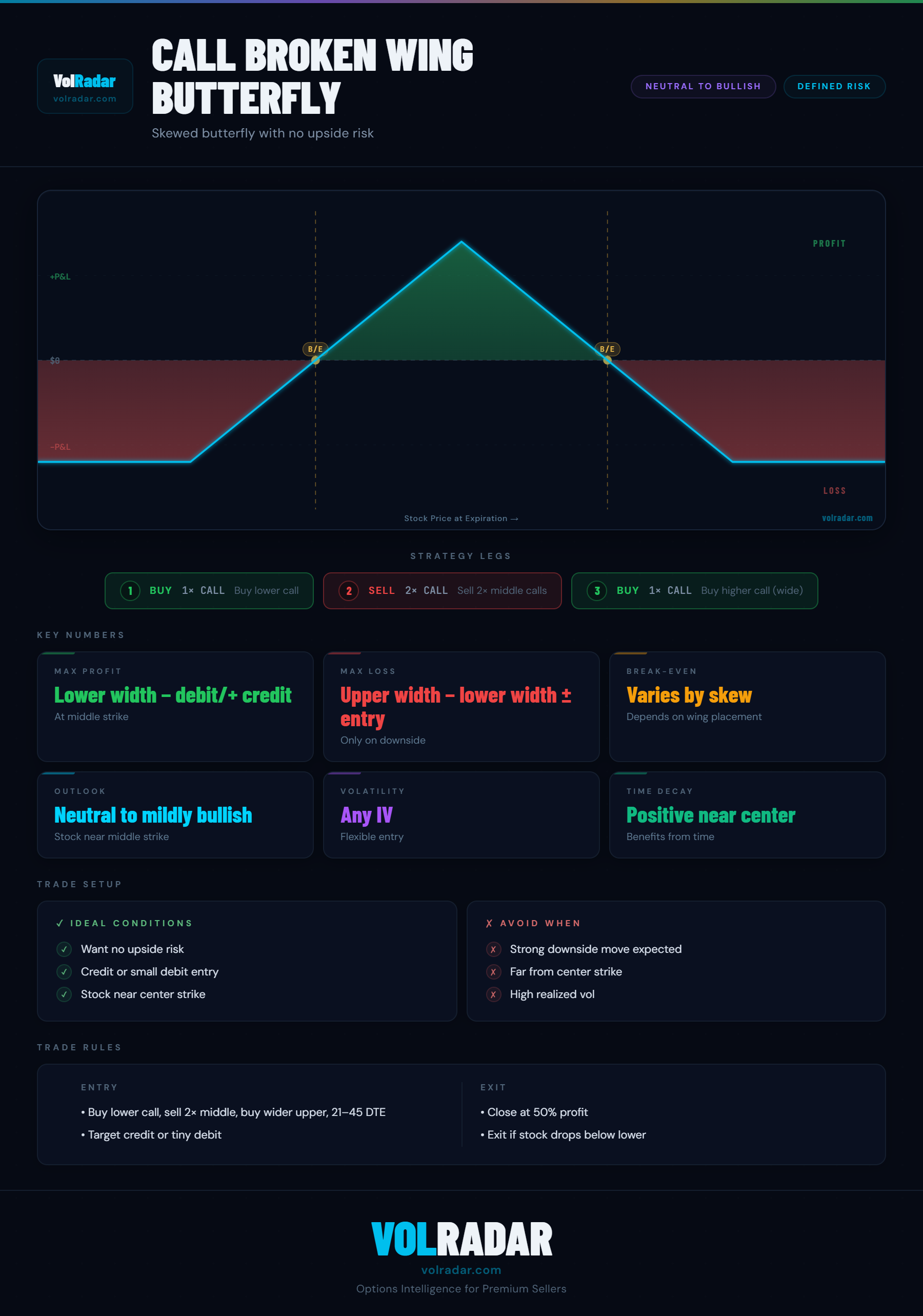
How the broken wing changes risk
In a standard call butterfly, risk is equal on both sides. In a call broken wing where the upper wing is wider, the upper side becomes riskier (larger potential loss on a big rally) while the lower side may show no loss or even a small profit if the stock drops. If the structure is entered at a credit, the lower side (below the long call) always shows profit — you only lose if the stock rallies significantly above the upper strike.
When to use a call broken wing butterfly
Use when you want a butterfly structure but prefer a credit instead of a debit. Broken wing butterflies are often used when you are slightly bearish — centering the short strikes at or slightly above the current price and taking the credit. If the stock stays flat or falls, you keep the credit. The break-even on the upside is typically a significant rally. Avoid in strongly bullish markets where the stock might run through the upper strikes.
Risk and reward
If entered at a credit: the downside has no risk, and the position keeps at minimum the credit if the stock drops. The upside risk is the gap between the short strikes and the wider upper wing. Max profit is at the middle (short) strike. The broken wing butterfly is more complex than a standard butterfly — model it in the Strategy Builder to confirm the exact P&L profile before entering.