
What is a jade lizard?
A jade lizard is a three-legged strategy: sell an OTM put, sell an OTM call, and buy a higher-strike call. The call spread (short call + long call) caps the upside risk. The key condition: the total credit collected from all three legs must be greater than the width of the call spread. When this condition is met, there is no upside risk — the most you can make on the call side is zero (spreads fully offset), and you keep the put premium.
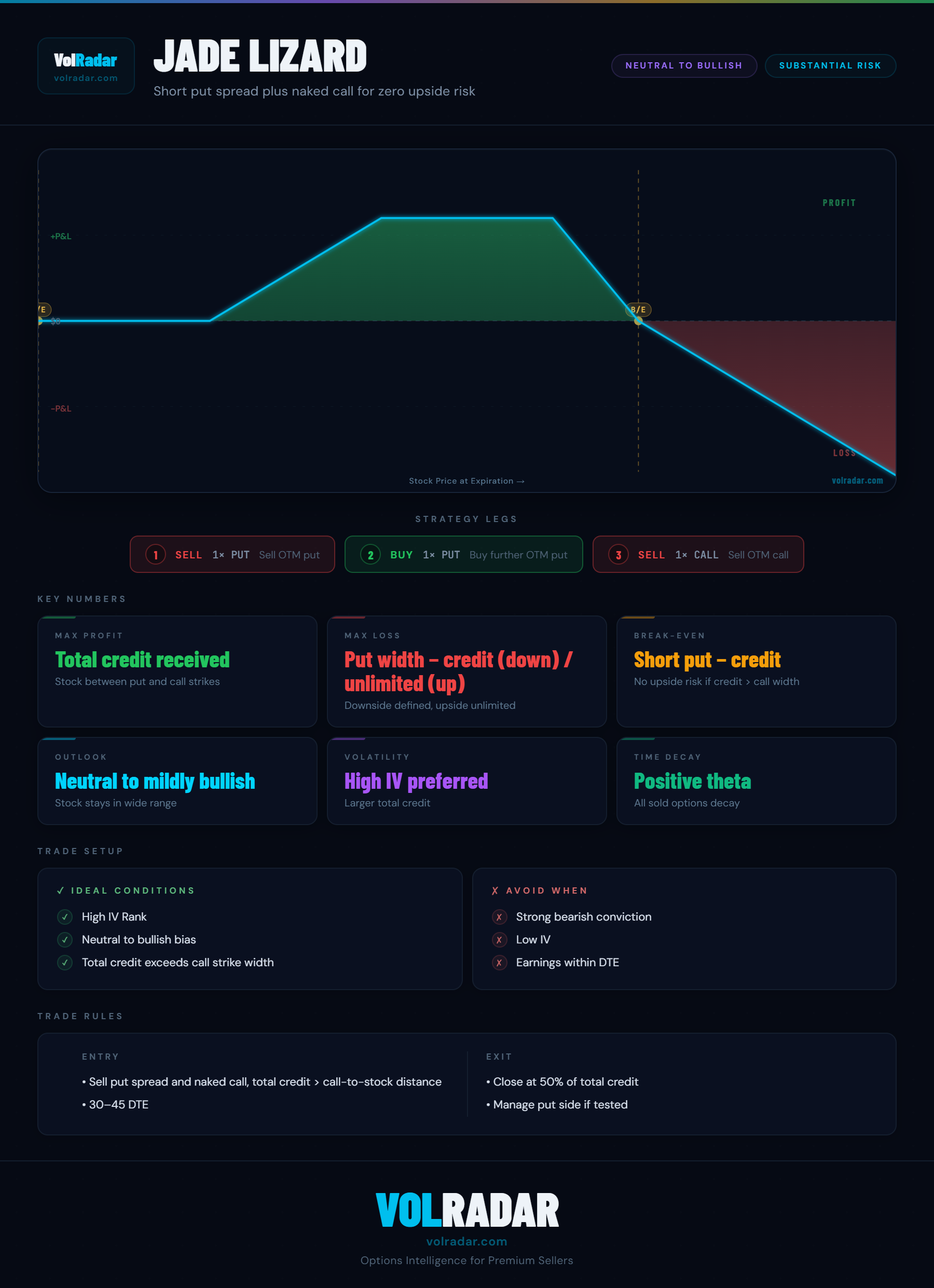
Jade lizard setup
Sell an OTM put (e.g., 30 delta), sell an OTM call (e.g., 20 delta), and buy a call 3–5 strikes higher. Ensure: premium from short put + net credit from call spread ≥ width of call spread. Example: $100 stock, sell the $90 put for $2.00, sell the $108 call for $1.50, buy the $111 call for $0.75. Net credit = $2.75, call spread width = $3. Credit ($2.75) < spread ($3) — adjust strikes until credit exceeds the spread width.
Why traders use jade lizards
The jade lizard is popular because it neutralizes one side of the risk. In a market where a stock has strong support below but might rally, selling a strangle has uncomfortable upside risk. By converting the short call into a call spread, you eliminate that concern entirely. The position becomes a bullish-to-neutral premium selling trade with the only risk coming from a downside break through the short put.
Risk and management
Upside risk is zero if set up correctly (credit > call spread width). Downside risk is the put strike minus total credit received, just like a cash-secured put. Manage at 50% of max profit. If the stock drops toward the put strike, treat it like a cash-secured put — decide whether you are willing to own the shares at the strike. The jade lizard has the same downside risk profile as a standalone short put.