
What is a reverse jade lizard?
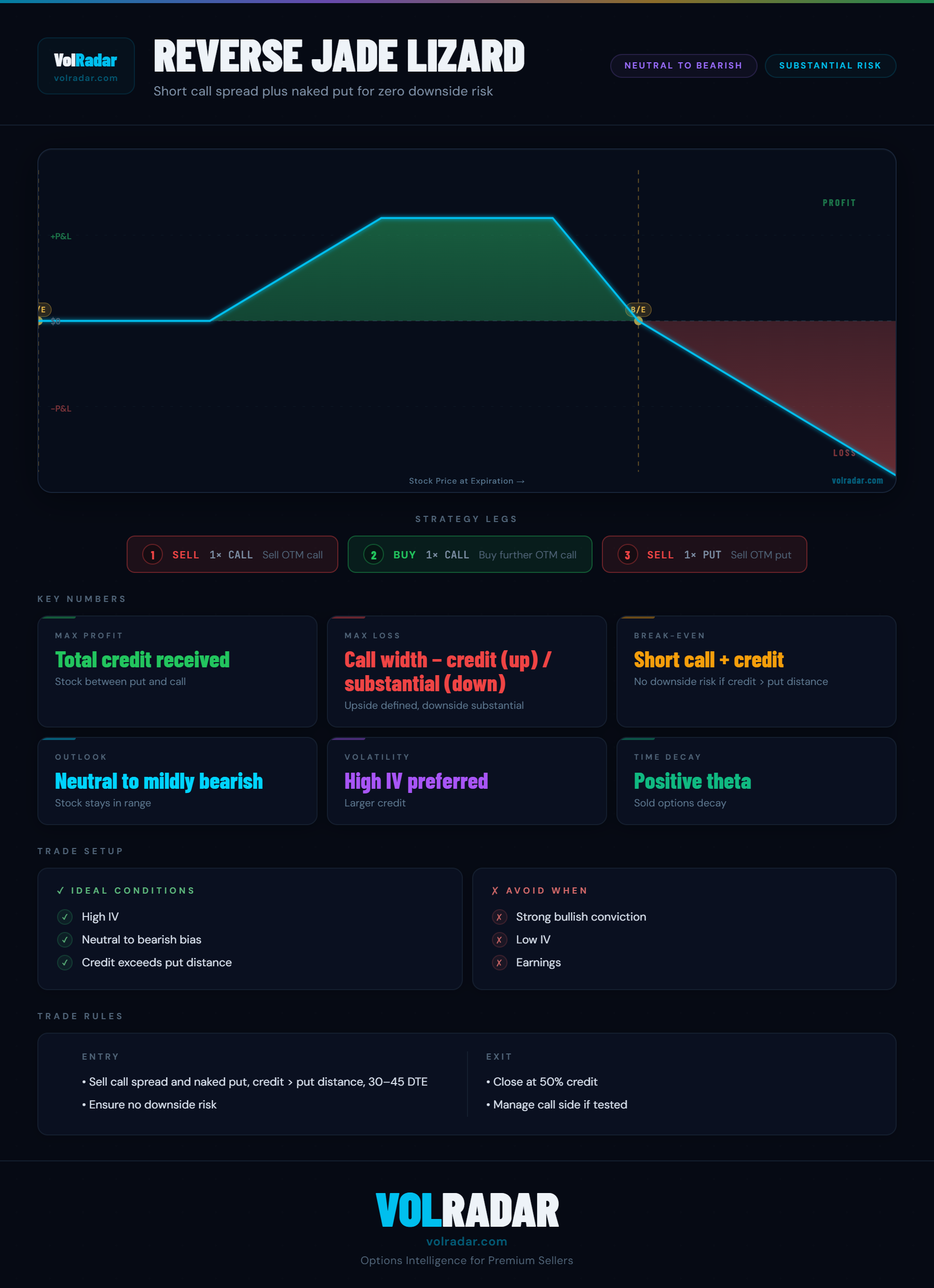
A reverse jade lizard sells an OTM call, sells an OTM put, and buys a lower-strike put. The put spread on the downside caps the downside loss. When the total credit from all three legs exceeds the width of the put spread, there is zero downside risk — the position can only lose if the stock rallies above the short call. Also sometimes called a "big lizard" or "twisted sister" depending on the strike configuration used.
Reverse jade lizard vs jade lizard
The jade lizard removes upside risk (uses a call spread). The reverse jade lizard removes downside risk (uses a put spread). The choice depends on your market bias: if the stock has stronger support below (less likely to fall sharply), use the jade lizard and eliminate the upside risk. If the stock is more likely to stay flat or fall slightly, use the reverse jade lizard and eliminate the downside risk.
Setup conditions
Sell an OTM call (15–25 delta), sell an OTM put (25–35 delta), buy a put 3–5 strikes lower. Verify: credit from short call + net credit from put spread ≥ width of put spread. If the condition is met, there is zero risk on the downside — a drop to zero would result in zero loss, only the put spread width limits upside exposure from the structure itself. The short call carries the remaining risk.
Risk and management
Downside risk is zero if structured correctly. Upside risk is the short call — technically unlimited if naked, but in practice most traders manage the position before the call is breached. Consider rolling the short call if the stock approaches the strike. Close at 50% of max profit. The reverse jade lizard is well-suited for stocks with strong bearish or neutral technicals where the main concern is a rally.