
What is a short strangle?
A short strangle sells an OTM put below the current stock price and an OTM call above the current stock price at the same expiration. You collect premium from both options. The profit zone is the wide range between the two strikes. As long as the stock stays within the profit zone through expiration, both options expire worthless and you keep the full premium. The further OTM the strikes, the wider the profit zone but the less premium collected.
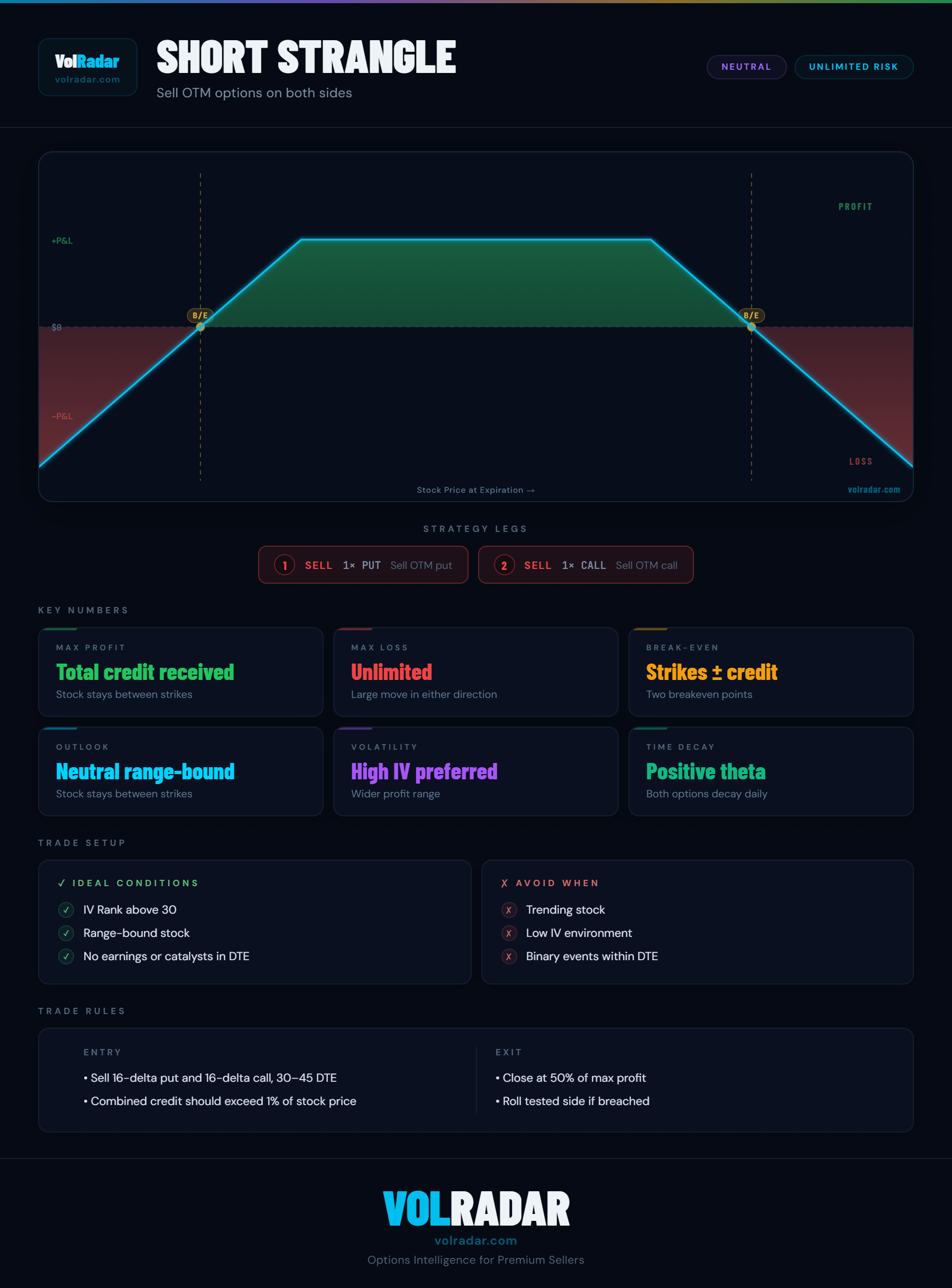
Short strangle mechanics — the 16-delta setup
The classic short strangle uses the 16-delta strikes on both sides — approximately 1 standard deviation OTM. This gives each side roughly 84% probability of expiring OTM. At 45 DTE, with the short put at 16-delta and short call at 16-delta, you are collecting premium from two high-probability OTM options. Use the VolRadar Expected Move Calculator to confirm your strikes are outside the 1σ range before entering.
Short strangle vs iron condor
An iron condor adds long OTM wings to a short strangle, defining the maximum loss. The wings cost premium (reducing the credit collected) but cap the risk. Professional traders with large, diversified books may run naked strangles for capital efficiency; most retail traders should use iron condors. The difference in premium collected is typically 10–20% of the spread width — a small cost for significant risk reduction.
Management rules
Close at 50% of max profit or 21 DTE (whichever comes first). If one side is tested (stock approaches a strike), consider rolling the untested side toward the stock to collect additional credit and improve delta. If the stock breaks through a short strike, the position needs active management — close the breached spread or roll out to a later expiration. Position sizing: treat the short strangle like a stock position in the same name for risk purposes.