
What is a short straddle?
A short straddle sells 1 ATM call and 1 ATM put at the same strike price and expiration. You collect premium from both options — typically the highest premium available for any strategy structure. The position profits if the stock stays near the strike through expiration. Both options decay over time, and if the stock pins at the strike, both expire worthless and you keep the full premium. The narrow profit range and undefined risk are the key challenges.
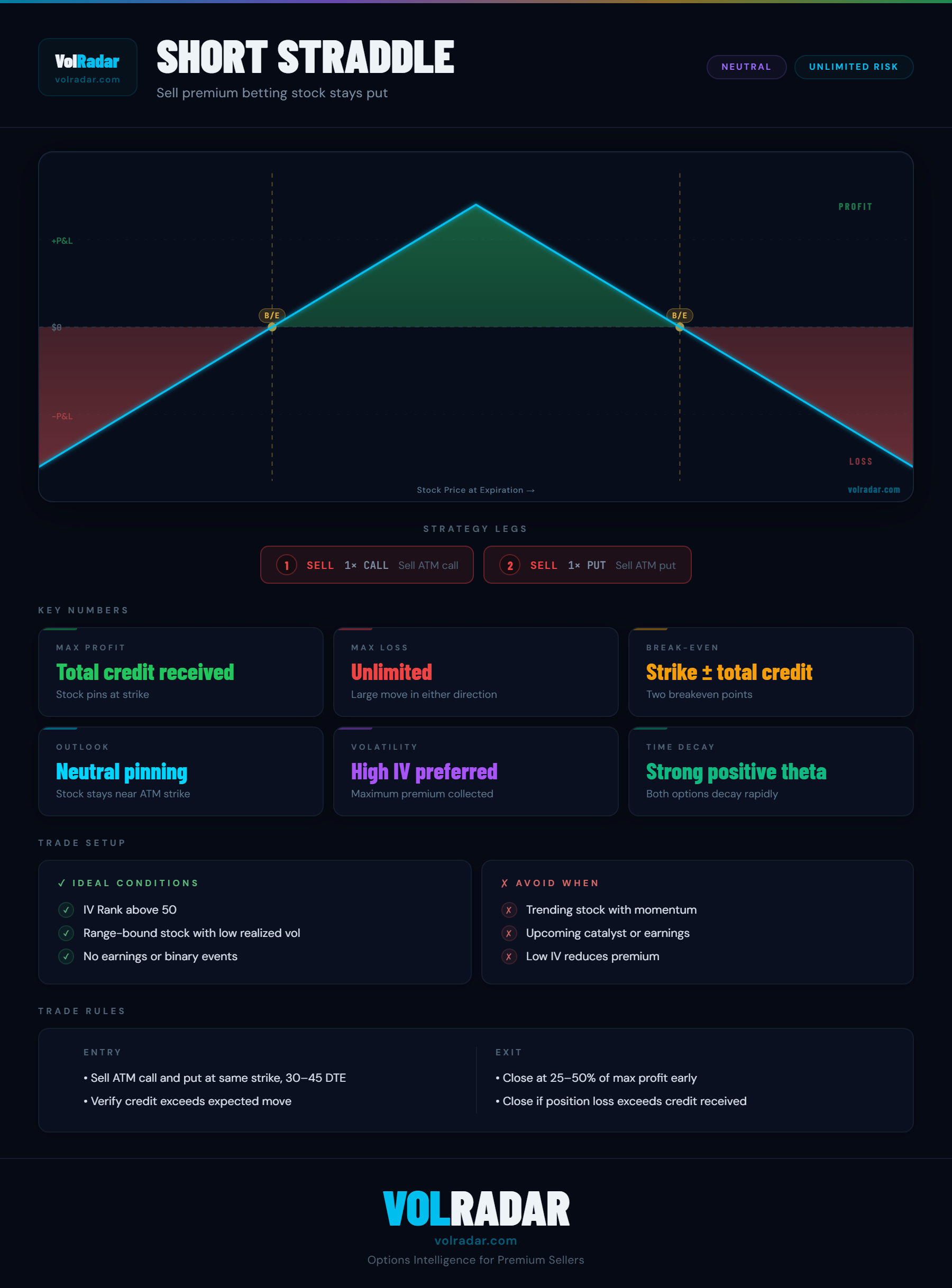
Short straddle vs iron butterfly
An iron butterfly adds OTM wings to a short straddle, capping the risk on both sides. The trade-off: the wings cost premium, reducing the net credit collected. Professional traders prefer the short straddle for maximum capital efficiency; most retail traders should use the iron butterfly for the same trade with defined risk. The iron condor gives a wider profit zone at the cost of even less premium.
When to use a short straddle
Short straddles work best when IV Rank is very high (above 70) and realized volatility is expected to drop significantly. The ideal scenario is a stock that has been volatile and is expected to calm down — selling the inflated implied volatility and collecting premium while the stock consolidates. Avoid short straddles before earnings, FOMC announcements, or any binary events that could cause a large gap move.
Management and risk
Manage short straddles at 25–50% of max profit because the remaining profit is not worth the gamma risk near expiration. If the stock tests one side (breakeven), roll the untested side toward the stock to improve credit and adjust delta. Use a hard stop at 2x the premium collected as a loss limit. Because risk is undefined, strict position sizing is critical — never risk more than 2–3% of portfolio on a single short straddle.