
What is an iron butterfly?
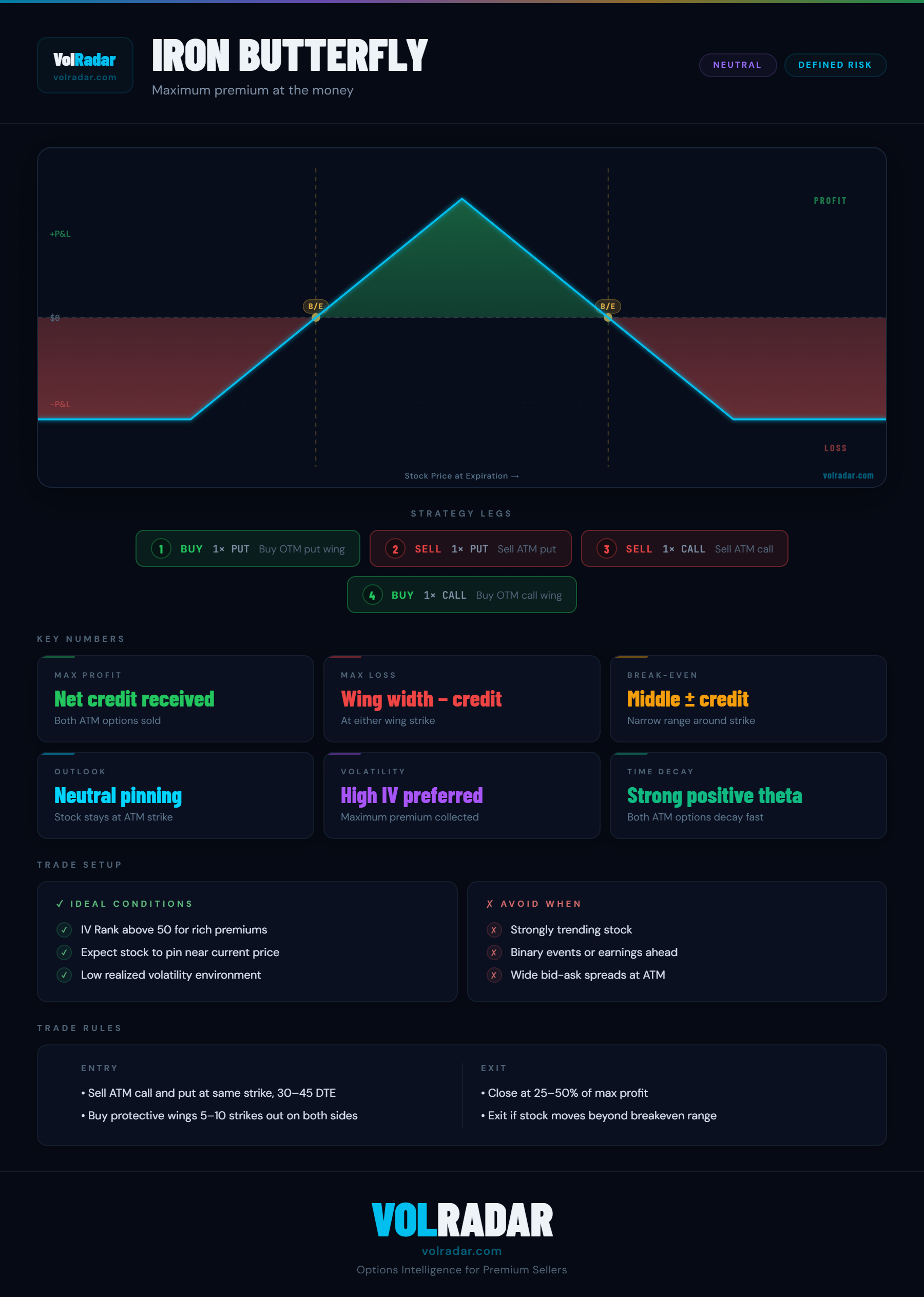
An iron butterfly sells an at-the-money (ATM) call and ATM put at the same strike, then buys an OTM call above and an OTM put below as protective wings. The short strike is typically the current stock price. Because you are selling the ATM options (highest extrinsic value), the premium collected is significantly higher than an iron condor — but the profit zone is much narrower.
Iron butterfly vs iron condor
The iron condor spreads the short strikes apart (OTM on both sides) for a wider profit zone but lower premium. The iron butterfly places both short strikes ATM for a narrow profit zone but maximum premium. The butterfly requires the stock to stay very close to the strike; the condor tolerates more movement. For most premium sellers, the iron condor is preferred because the wider zone reduces the chance of the position being tested.
How to set up an iron butterfly
Sell 1 ATM call and 1 ATM put at the same strike. Buy a call 5–10 strikes above and a put 5–10 strikes below for protection. The premium collected should be at least 30–40% of the distance between the short strike and either wing. Enter at 30–45 DTE when IV Rank is above 50. Manage at 25–50% of max profit — do not wait for the full profit since the narrow profit zone means small moves quickly erode gains.
Risk and reward
Max profit is the net credit collected. Max loss is the wing width minus the credit. Breakevens are the short strike plus and minus the premium collected. Because the profit zone is narrow, the iron butterfly is sensitive to directional moves — a stock that drifts even slightly can turn a winner into a loser. This strategy works best in very low realized volatility environments after a period of elevated implied volatility.