
What is a synthetic put?
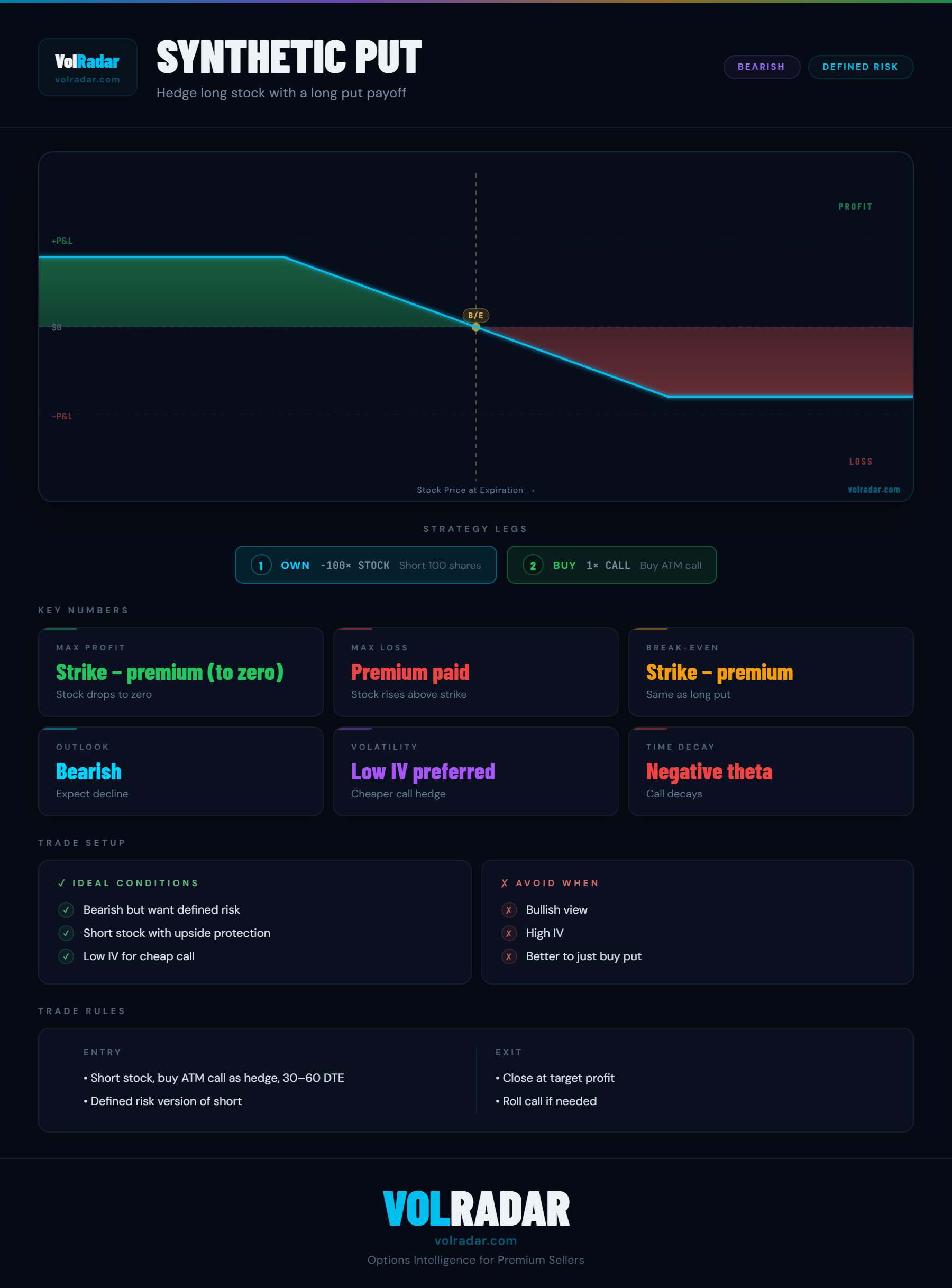
A synthetic put combines shorting 100 shares with buying 1 ATM call option. If the stock falls, the short stock position profits — equivalent to a long put gaining value. If the stock rallies, the long call gains value, offsetting the short stock loss — equivalent to a long put expiring worthless but losing only the premium. The net P&L replicates a long put at the strike of the call.
Why use a synthetic put vs a direct long put
A synthetic put is used when put options are unavailable, illiquid, or significantly overpriced relative to calls. In markets with high put skew, buying a put directly is expensive — the synthetic put achieves the same exposure by shorting the stock and buying a (relatively cheaper) call. It is also used in hedging strategies where the short stock position already exists.
Put-call parity and synthetics
Put-call parity establishes that: Long put = Short stock + Long call + PV(dividend). This mathematical relationship is the foundation of synthetic options. If the pricing ever deviates significantly, arbitrageurs will close the gap. Understanding put-call parity allows traders to identify which synthetic combination is most cost-efficient in any given market condition.
Risk considerations
The short stock component requires a margin account and borrow ability. The long call limits the maximum loss if the stock rallies sharply — unlike a naked short stock position. The net cost is the call premium minus any credit received from short selling (minus borrow fees). In practice, direct long puts are simpler for retail traders; synthetic puts are mainly institutional tools for specific hedging situations.