
What is a short synthetic future?
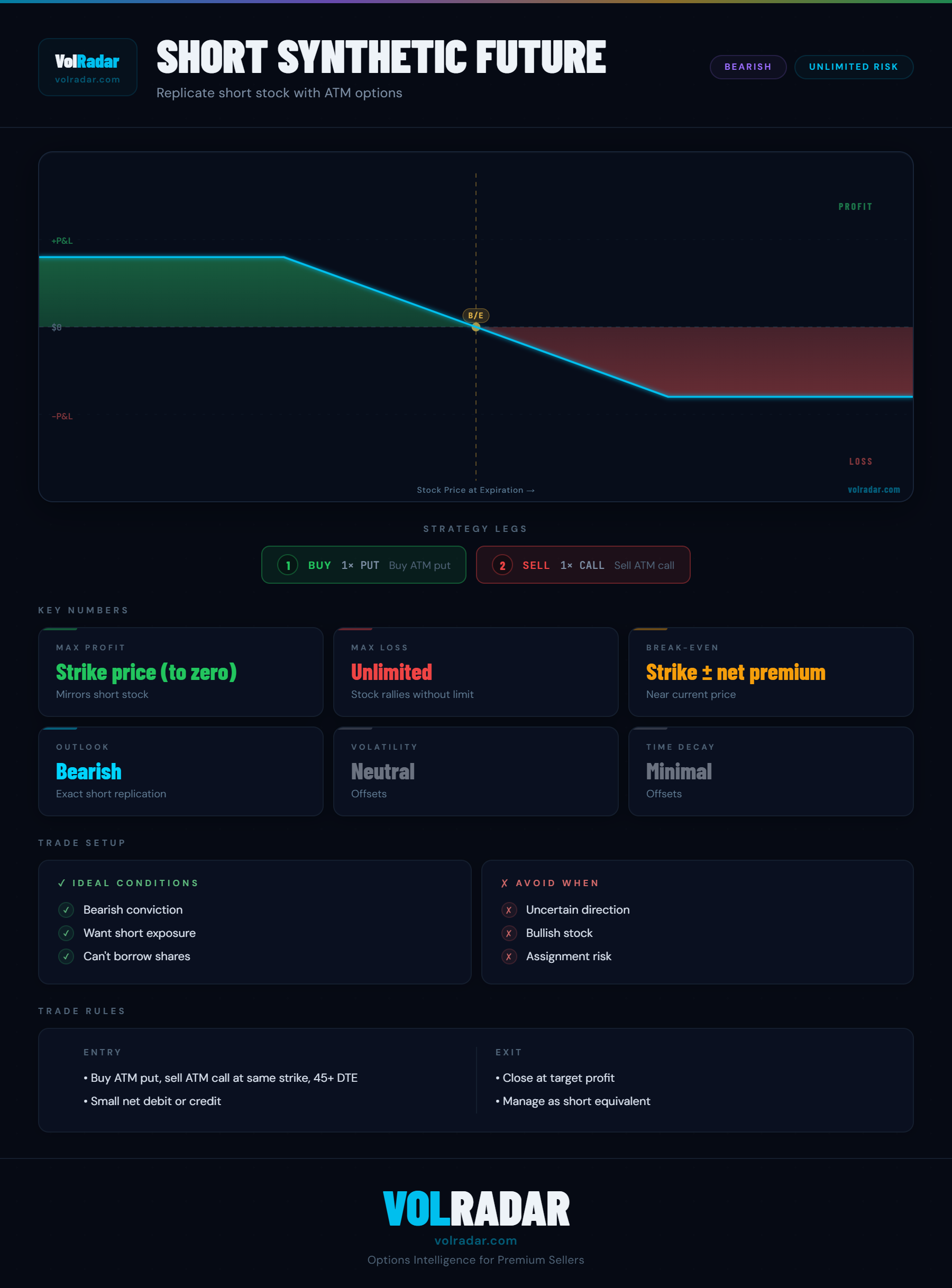
A short synthetic future sells 1 ATM call and buys 1 ATM put at the same strike and expiration. The combined position replicates shorting 100 shares: it gains value when the stock falls and loses when the stock rises. If the stock rallies sharply, the short call creates theoretically unlimited losses — the same risk as being short the stock. The short synthetic is used as an alternative to stock shorting.
Short synthetic vs short selling
Short selling borrows and sells shares — requires a locate, borrow fee, and margin. A short synthetic sells a call and buys a put — no borrow required, potentially more efficient in terms of fees. Both have identical P&L profiles. The short synthetic is preferred when shares are hard to borrow, when options are more liquid than the stock itself, or in markets where short selling is restricted.
Risk of unlimited loss
Just like short selling, a short synthetic future has theoretically unlimited loss if the stock rallies without limit. The short call component has the same risk as a naked short call. If you plan to use a short synthetic for more than a brief trade, always add a long OTM call as a stop-loss to cap the upside risk — converting it to a bear put spread equivalent.
Practical applications
Institutional traders use short synthetics for capital-efficient hedging of long stock positions. They are also used in pairs trades and arbitrage. Retail traders may use them as an alternative to short selling in accounts where shorting is unavailable. Before using short synthetics, understand the full risk — the upside loss is unlimited and can exceed the capital committed to the position.