
What is a short combo?
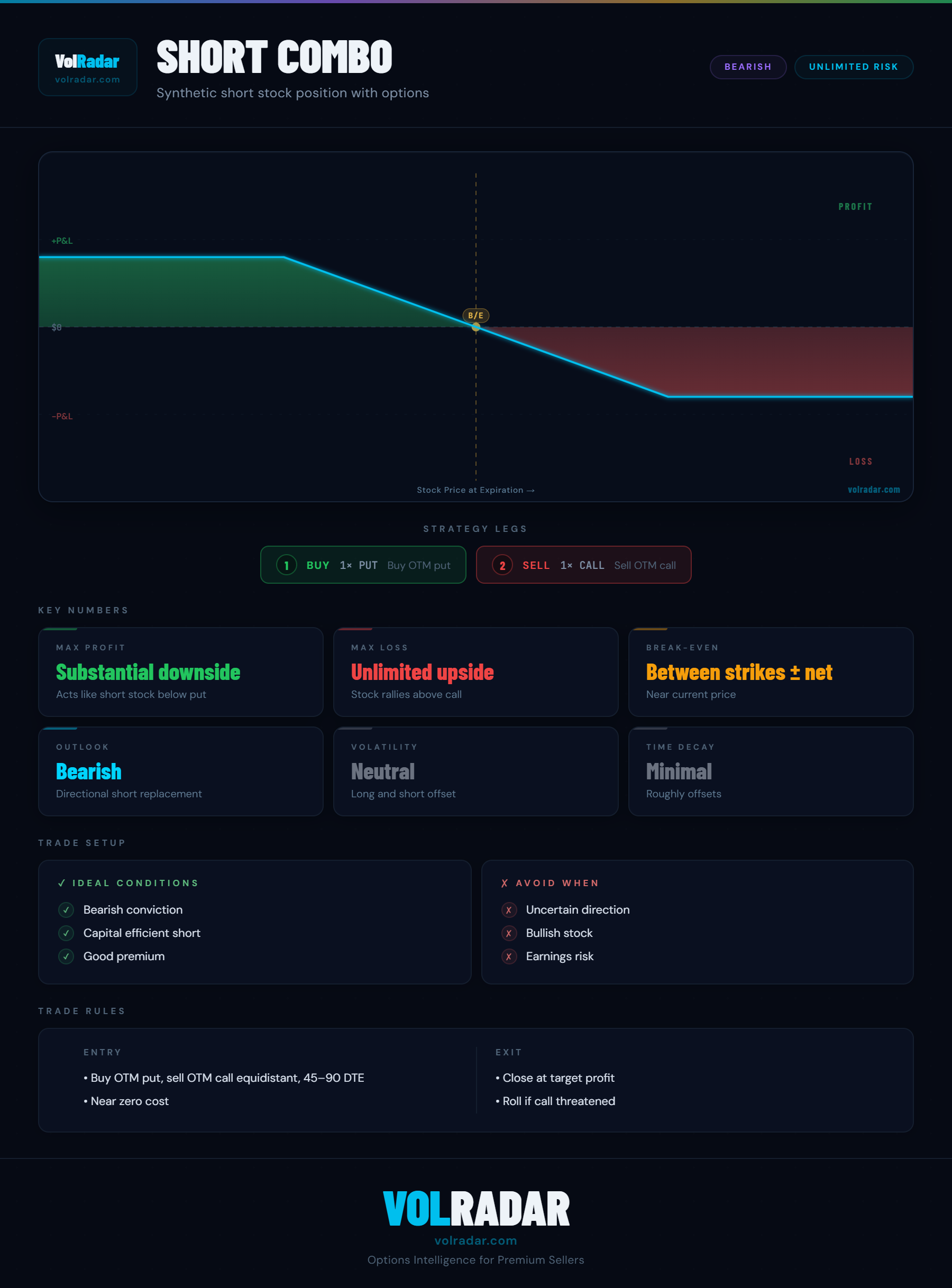
A short combo sells 1 OTM call and buys 1 OTM put at different strikes. The short call premium funds the long put cost — net entry is near zero or a credit. If the stock falls below the long put strike, the put gains value. If the stock rises above the short call strike, the short call creates increasing losses. The position is bearish-directional with a flat zone between the two OTM strikes.
Short combo vs short synthetic future
A short synthetic future uses ATM strikes — immediate delta, closely replicates short stock. A short combo uses OTM strikes — a neutral buffer zone in the middle. The short combo is used when you want to express a bearish view only if the stock makes a meaningful move down, without immediate delta exposure to small fluctuations. It is a capital-efficient bearish options structure.
Risk management
The short call has theoretically unlimited upside risk — if the stock rallies sharply, losses escalate. Set a hard stop or buy back the short call if the stock approaches the strike. Converting to a bear call spread (buying a higher-strike call) caps the risk. The long put has defined profit potential — it gains value linearly as the stock falls below the put strike.
When to use a short combo
Short combos are used for bearish views at minimal cost — ideal when you expect a meaningful decline but want to fund the long put purchase by selling an OTM call. High call skew markets (where calls are richly priced) are the most favorable environment. In most equity markets, put skew is higher than call skew, which can make short combos slightly more expensive than long combos.