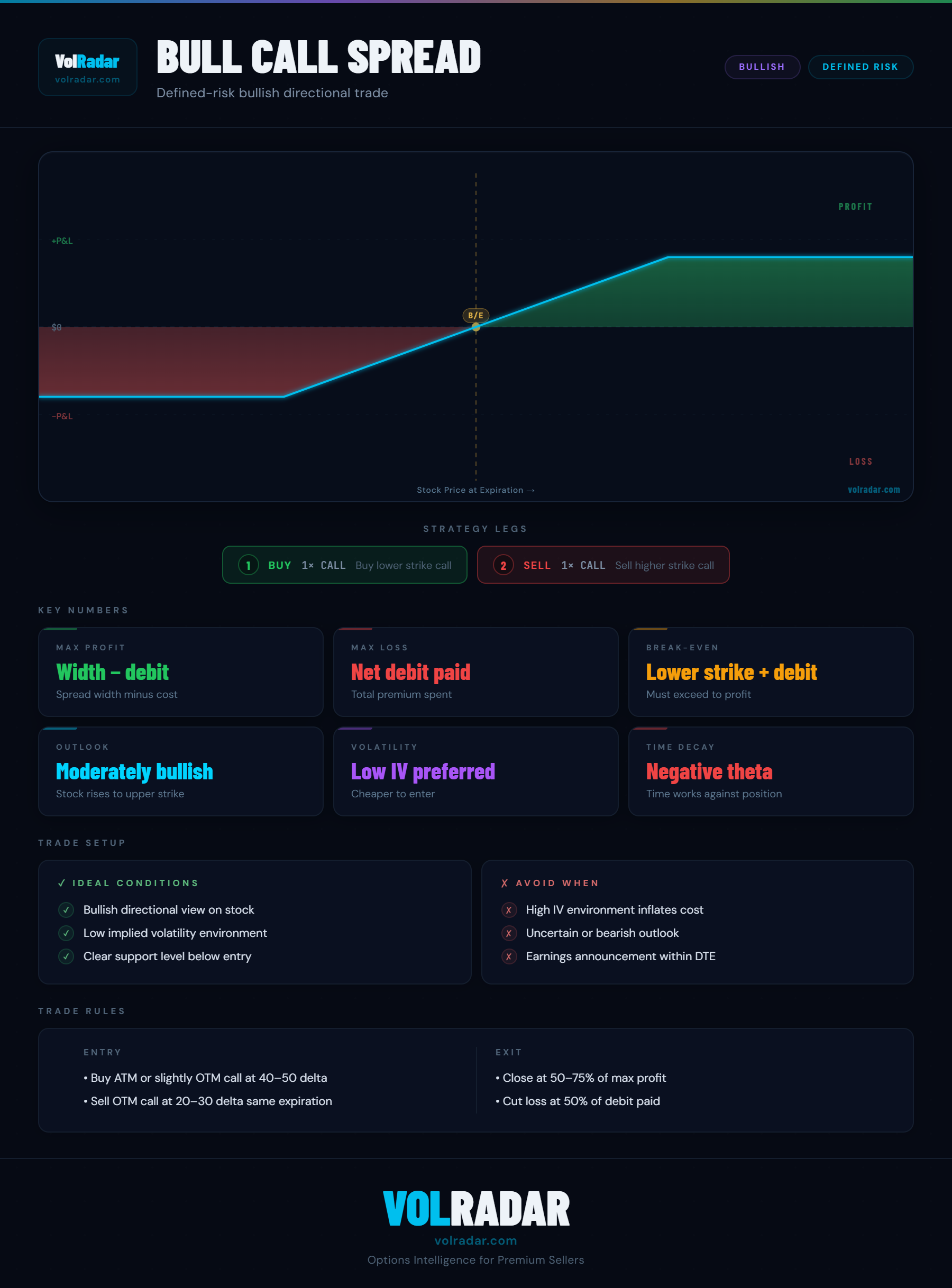
A vertical spread where you pay net premium (buy the more expensive option, sell the cheaper one). Defined risk and defined reward. The opposite of a credit spread.
⚡ KEY TAKEAWAY: You pay to play, with a known maximum loss. Debit spreads are directional bets with capped risk — the lower-cost alternative to buying options outright.
Why It Matters
Debit spreads are the defined-risk alternative to buying options outright. Instead of paying full premium for a directional bet, you offset part of the cost by selling a further-OTM option. Lower cost, lower max profit, but capital-efficient and risk-capped.
How It Works
Buy a closer-to-ATM option, sell a further-OTM option at the same expiration. Net cost = debit paid. Max profit = spread width − debit. Max loss = debit. The long leg gives you directional exposure; the short leg reduces cost but caps your upside.
Example
SPY at $580. Buy the $580 call for $8.50, sell the $590 call for $4.50. Net debit: $4.00. Max profit: $10 − $4 = $6.00 (if SPY above $590). Max loss: $4.00 (if SPY below $580). Breakeven: $584. Compared to buying the $580 call alone ($8.50 risk), the spread cuts your max loss in half.
Common Mistakes
Going too wide on the spread thinking you'll capture more upside. Wider spreads cost more and have lower ROC. Also: holding debit spreads to expiration for max profit. The last 10% of max profit has terrible risk/reward — close at 50-75% of max profit.
A vertical spread where you pay net premium (buy the more expensive option, sell the cheaper one). Defined risk and defined reward. The opposite of a credit spread.
Why does Debit Spread matter for premium sellers?
You pay to play, with a known maximum loss. Debit spreads are directional bets with capped risk — the lower-cost alternative to buying options outright.
How does Debit Spread work?
Buy a closer-to-ATM option, sell a further-OTM option at the same expiration. Net cost = debit paid. Max profit = spread width − debit. Max loss = debit. The long leg gives you directional exposure; the short leg reduces cost but caps your upside.
What are common mistakes with Debit Spread?
Going too wide on the spread thinking you'll capture more upside. Wider spreads cost more and have lower ROC. Also: holding debit spreads to expiration for max profit. The last 10% of max profit has terrible risk/reward — close at 50-75% of max profit.