
What is a diagonal put spread?
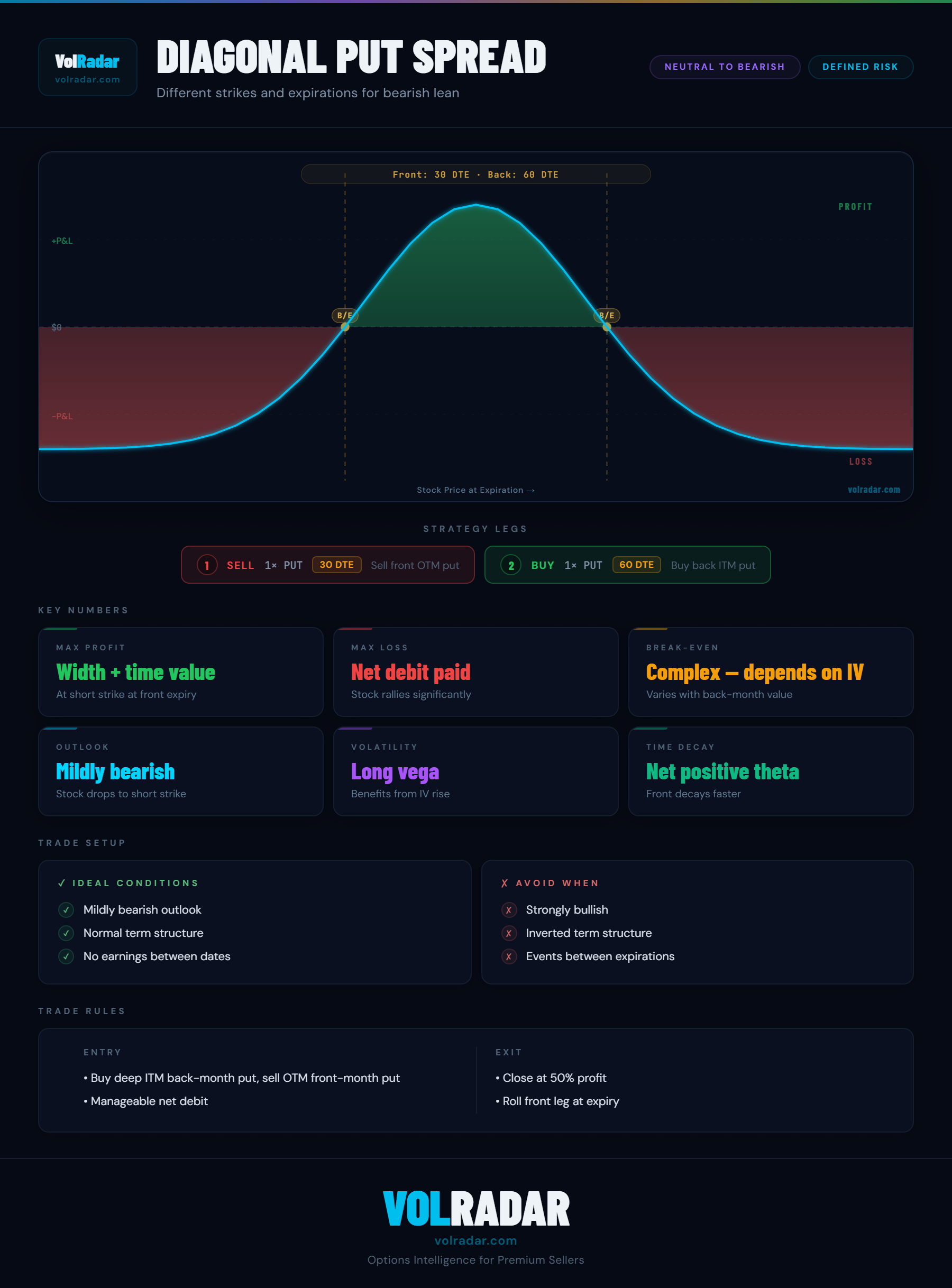
A diagonal put spread buys a longer-dated put at a higher (closer to ATM) strike and sells a near-term put at a lower OTM strike. The long put provides bearish directional exposure; the short put generates income. As the near-term put decays, it reduces the cost of the long position. If the stock falls to the short put strike, the full spread value is realized. If it falls further, the long put continues to gain.
Setup and strike selection
Buy a put with 60–90 DTE at 40–50 delta (near ATM). Sell a put with 20–30 DTE at 20–25 delta (OTM). The net debit should be substantially less than the cost of the long put alone — the short put credit reduces the overall position cost. Roll the short put after expiry to continue collecting income against the long put position.
Diagonal put vs bear put spread
A bear put spread uses the same expiration for both legs. A diagonal put spread uses different expirations — the long put has more time, reducing the risk of being right on direction but wrong on timing. The diagonal provides more time for the bearish thesis to play out. The trade-off is managing two expirations and the possibility that near-term short put income may not fully offset long put decay if the stock stays flat.
Risk and IV considerations
Max loss is the net debit paid (long put cost minus credits received from short puts). The position is long vega — it benefits from rising IV, which typically happens in falling markets (favorable). If the stock rises and IV drops, the long put loses value from both directions simultaneously. Enter diagonal put spreads when IV is moderate and the stock is at resistance or showing signs of a potential decline.