
What is a diagonal call spread?
A diagonal call spread uses two calls at different strikes AND different expirations. Typically: buy a deep ITM call with 6–12 months to expiration (high delta, acts like stock) and sell an OTM call with 30–45 DTE (collects income). The long call provides directional exposure and acts as collateral for the short call. This is the "Poor Man's Covered Call" structure — same income potential as a covered call with significantly less capital required.
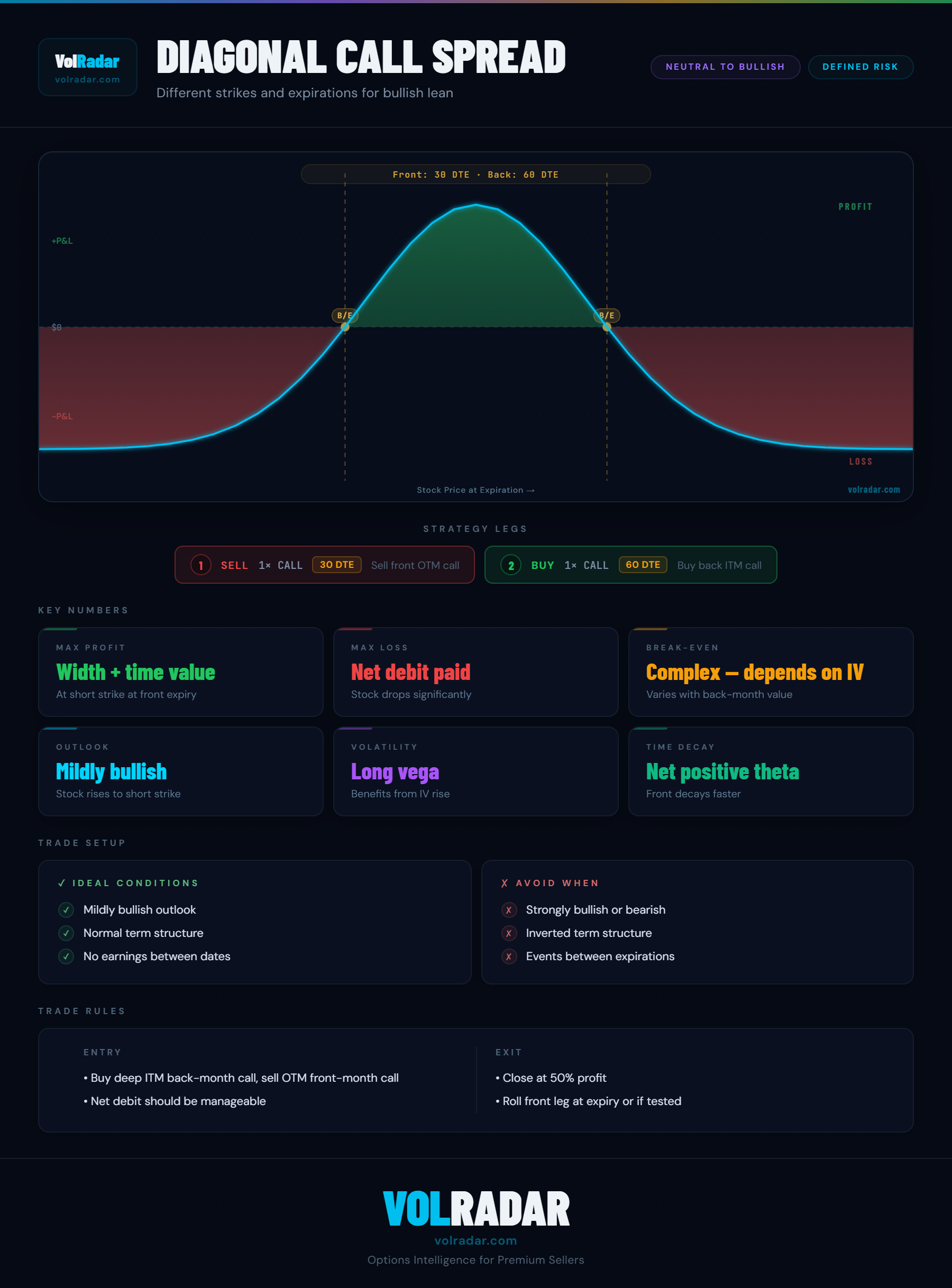
Diagonal call spread vs covered call
A covered call requires owning 100 shares (full capital). A diagonal call spread replaces shares with a deep ITM LEAPS call — same delta exposure, but capital required is 25–40% of the stock position. The LEAPS call should have 0.80+ delta to behave like the stock. Risk: if the stock falls sharply, the LEAPS loses intrinsic value (just like the stock) and can expire worthless if the decline is severe.
Rolling the short leg for income
After the front-month short call expires, sell a new OTM call against the same LEAPS — collecting fresh premium for the next cycle. Repeat monthly. The LEAPS gradually loses time value over its life, so ensure the recurring short call income exceeds the rate of LEAPS decay. Use strikes that keep the short call OTM but rich enough to be worth selling — typically 30–45 delta is too rich; 20–30 delta is standard.
Risk and limitations
Max loss is the LEAPS cost minus any credits collected from short calls. If the stock rallies sharply above the short call strike, gains are capped (same as a covered call). If the stock falls sharply, the LEAPS loses most of its value. Diagonal call spreads are bullish strategies — they work best in gradually rising or range-bound markets. Avoid in strongly bearish environments where the LEAPS value will erode quickly.