
What is a short call?
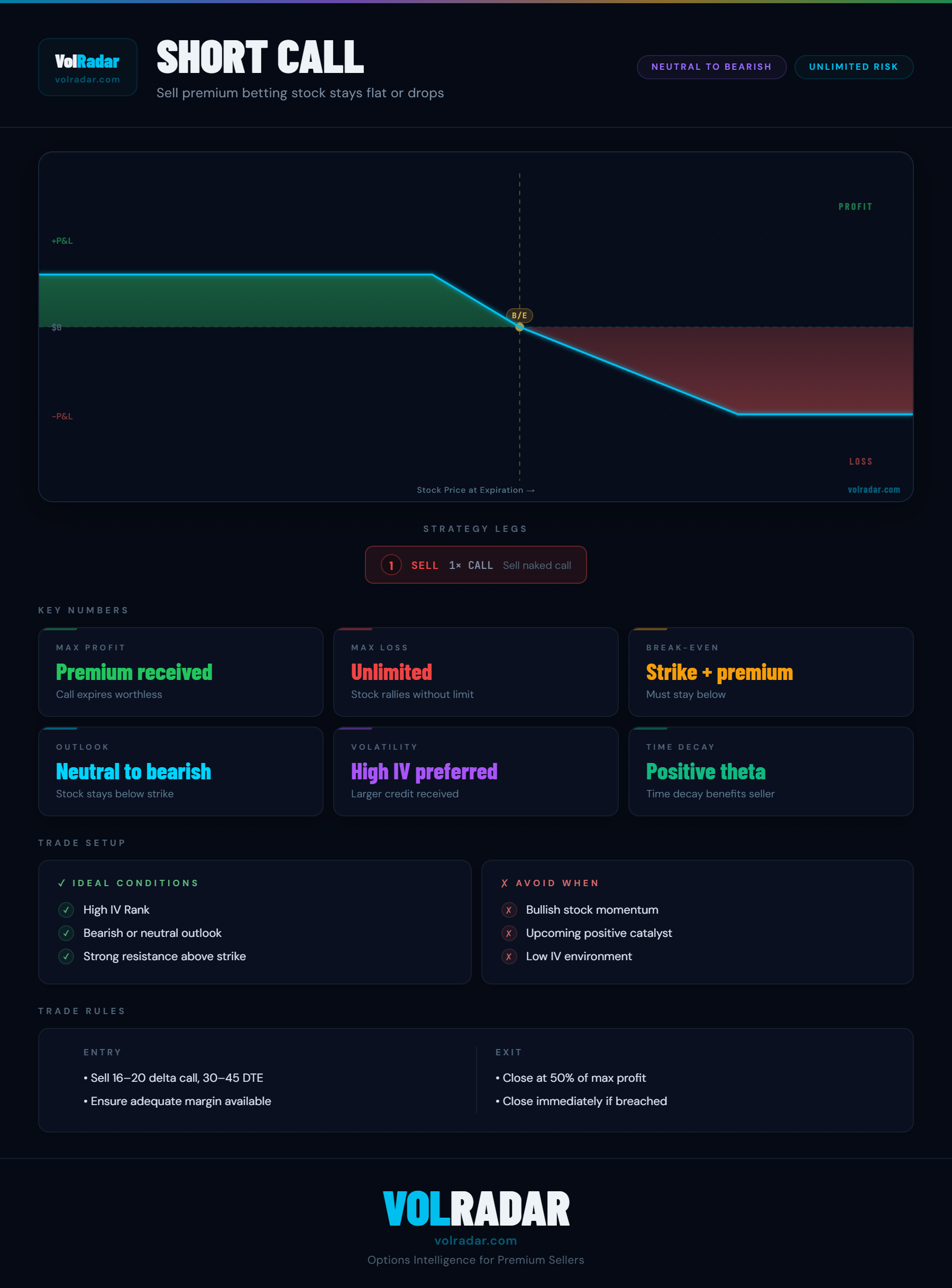
A short call (or naked call) sells a call option without owning the underlying shares. You collect the full premium and keep it if the stock stays below the strike through expiration. If the stock rises above the strike, you are obligated to sell shares at the strike price — but since you do not own them, you must buy them at market price, creating potentially unlimited losses. Short calls require Tier 3 or higher options approval at most brokerages.
Short call vs covered call
A covered call sells a call while owning 100 shares — if the stock rallies and the call is exercised, you deliver your shares at the strike price (capped gain). A short (naked) call sells without owning the shares — if the stock rallies past the strike, you must buy shares at market price to deliver, creating open-ended losses. Covered calls are suitable for most retail investors; naked calls are for professionals or highly experienced traders only.
When short calls are used
Professional traders sell naked calls when they have a strong conviction the stock will not rally — for example, selling calls on a stock in a downtrend or after a failed breakout attempt. Short calls are also used as part of multi-leg strategies: selling a call as one leg of a bear call spread (adding the long call cap) converts the unlimited-risk naked call into a defined-risk position. Most retail traders should use bear call spreads instead.
Risk and margin
Max profit is the premium collected. Max loss is theoretically unlimited. Short calls require significant margin — typically 20% of the stock price plus the option premium minus the out-of-the-money amount. A sudden gap-up on earnings or news can result in losses many times the premium collected overnight. Always use stop-loss orders or defined-risk alternatives (bear call spreads) unless you have strict portfolio-level hedging in place.