
What is a short put?
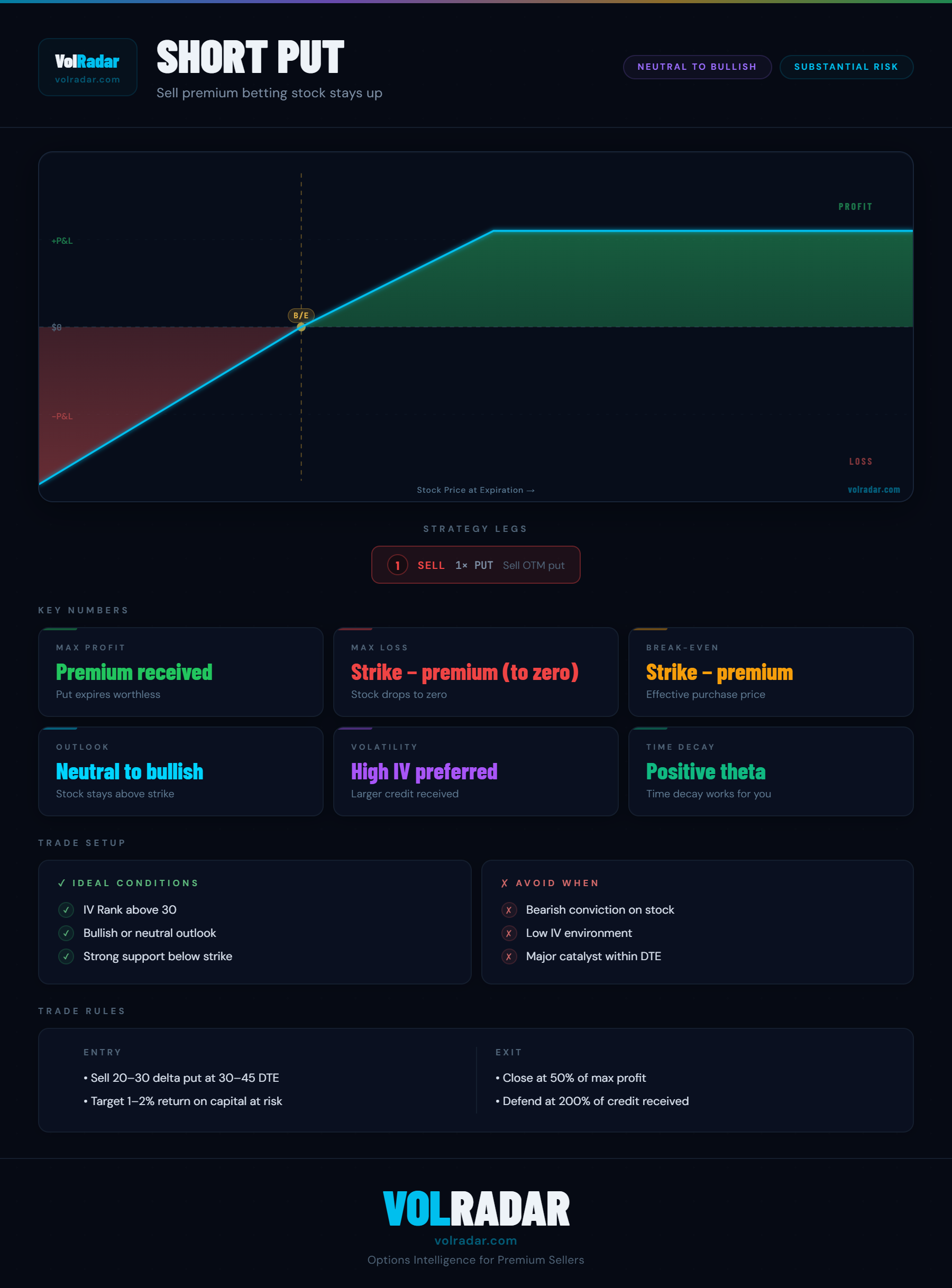
A short put (or naked put) sells a put option without fully securing the position with cash. If the stock drops below the strike at expiration, you are assigned 100 shares at the strike price. The premium collected is the maximum profit. Short puts are mechanically identical to cash-secured puts — the distinction is capital: a short put uses margin rather than full cash collateral, increasing return on capital but also increasing effective leverage.
Short put vs cash-secured put
The payoff diagrams of a short put and a cash-secured put are identical — sell a put, collect premium, risk owning the stock if it falls. The difference is margin: a cash-secured put holds the full purchase amount in cash (e.g., $5,000 for 100 shares at $50). A short put uses portfolio margin, requiring much less capital. Professional traders use short puts for capital efficiency; retail traders typically use cash-secured puts.
When to use a short put
Sell puts when IV Rank is elevated (above 40) on stocks you are willing to own. Avoid short puts before earnings, major news events, or in strongly trending downward markets. The 16–30 delta range offers a balance between premium collected and probability of staying OTM. Use the VolRadar scanner to find names with high IV Rank and a bullish or neutral weather score — ideal conditions for put selling.
Risk and position sizing
Max profit is the premium collected. Max loss is the strike price minus the premium (effectively owning the stock at a lower cost basis). Unlike defined-risk strategies, a short put has substantial downside if the stock collapses. Size short puts so that assignment would not represent more than 5–10% of the total portfolio in any single name. Always have a plan for what to do if assigned — roll, close, or convert to a covered call.