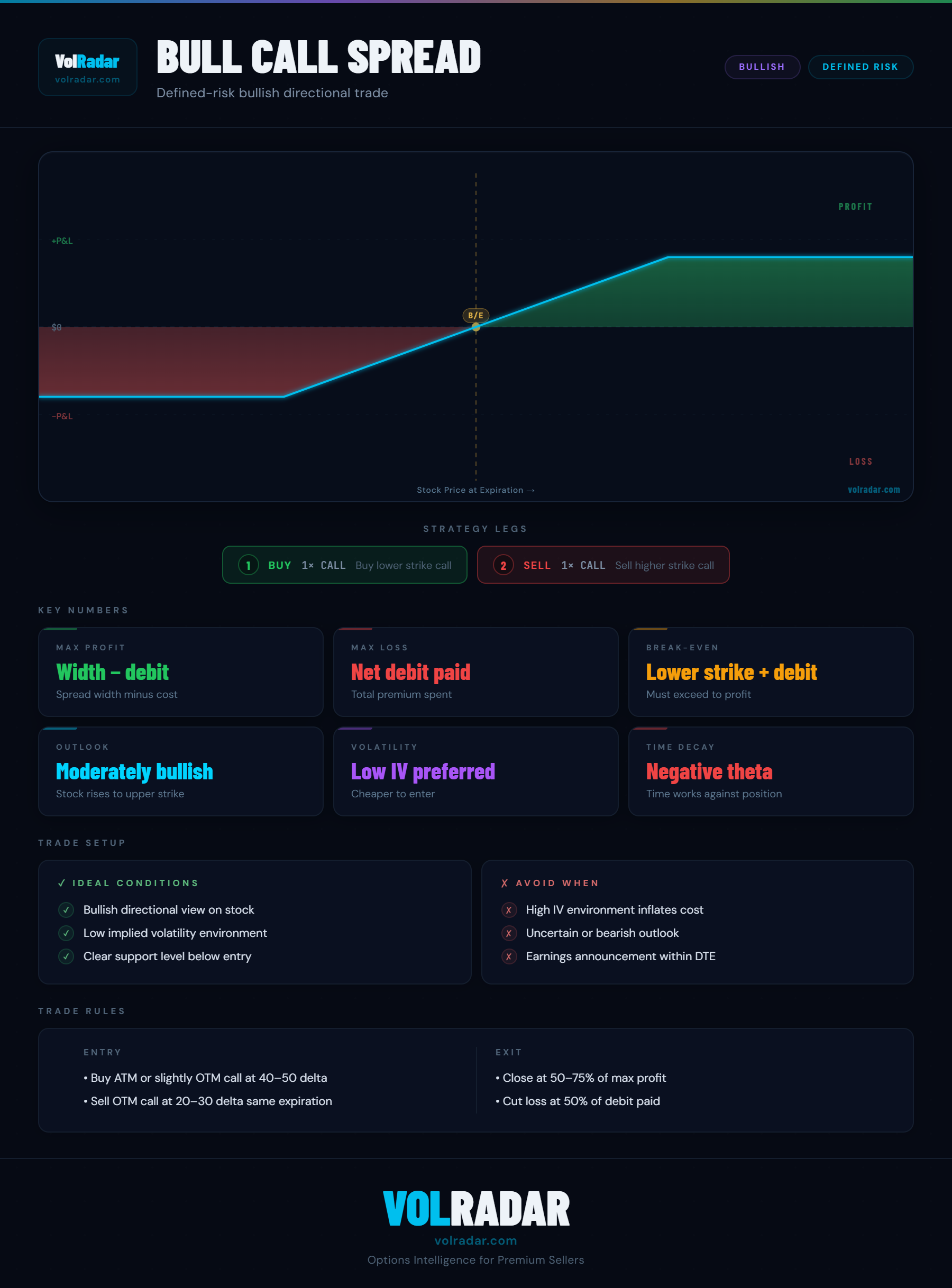
A bullish debit spread: buy a lower-strike call and sell a higher-strike call. Profits when the stock rises above the lower strike. Risk limited to net debit paid.
⚡ KEY TAKEAWAY: Cheaper than buying a call outright because the short leg offsets part of the cost. Maximum profit is capped at the spread width minus the debit.
Why It Matters
The bull call spread is the defined-risk bullish alternative to buying a call outright. You reduce cost by selling an upper call, but cap your profit at the spread width. Lower breakeven, lower cost, lower max profit — a disciplined way to be bullish.
How It Works
Buy a lower-strike call, sell a higher-strike call at the same expiration. Debit paid = max loss. Max profit = spread width − debit. The long call gives upside exposure; the short call caps your gain but offsets part of the cost.
Example
AAPL at $200. Buy $200 call ($8.50), sell $210 call ($4.50). Debit: $4.00. Max profit: $6.00 (at $210+). Max loss: $4.00 (at $200−). Breakeven: $204. Compared to buying the $200 call alone ($8.50 risk), the spread cuts risk by 53% but caps profit at $6.
Common Mistakes
Going too narrow. A $200/$202.50 spread costs $1.50 and max profit is $1.00 — commission eats a huge percentage. $5-$10 wide spreads are more efficient for most retail accounts.
A bullish debit spread: buy a lower-strike call and sell a higher-strike call. Profits when the stock rises above the lower strike. Risk limited to net debit paid.
Why does Bull Call Spread matter for premium sellers?
Cheaper than buying a call outright because the short leg offsets part of the cost. Maximum profit is capped at the spread width minus the debit.
How does Bull Call Spread work?
Buy a lower-strike call, sell a higher-strike call at the same expiration. Debit paid = max loss. Max profit = spread width − debit. The long call gives upside exposure; the short call caps your gain but offsets part of the cost.
What are common mistakes with Bull Call Spread?
Going too narrow. A $200/$202.50 spread costs $1.50 and max profit is $1.00 — commission eats a huge percentage. $5-$10 wide spreads are more efficient for most retail accounts.