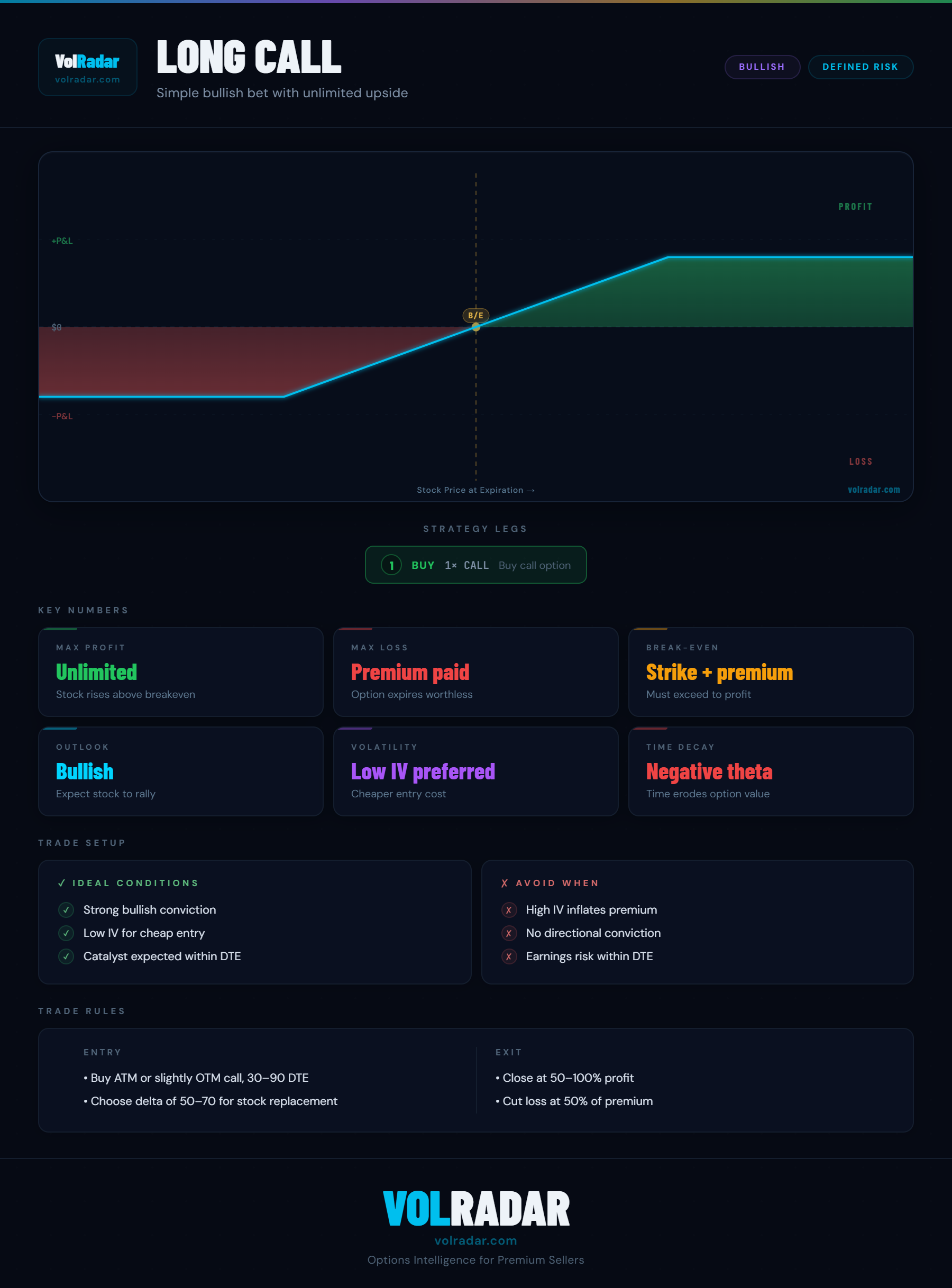
A contract giving the holder the right to buy 100 shares of the underlying at the strike price before expiration. Call buyers profit from upward moves; call sellers collect premium betting the stock stays below the strike.
⚡ KEY TAKEAWAY: Selling OTM calls (covered or as part of a spread) is the premium seller's bearish/neutral tool. Buying calls is the opposite bet.
Why It Matters
A call option is the most basic bullish options contract. Understanding calls is prerequisite to every strategy involving calls — covered calls, bull call spreads, bear call spreads, iron condors, and strangles all use calls as building blocks.
How It Works
The call buyer pays a premium for the right to buy 100 shares at the strike price before expiration. The call seller collects that premium and is obligated to sell shares at the strike if assigned. Call value increases when the stock rises (positive delta), decreases with time (negative theta for longs), and increases with IV (positive vega for longs).
Example
AAPL at $200. Buy the $205 call for $4.00. If AAPL rises to $215 by expiration: intrinsic = $10, profit = $6.00 per share ($600 per contract). If AAPL stays below $205: call expires worthless, loss = $4.00 per share ($400 per contract). Breakeven: $209.
Common Mistakes
Buying calls without checking IV. If IV is high, the call is expensive — you need a larger move to overcome the premium paid. High-IV calls are better sold (via spreads) than bought. Also: holding long calls too long. Theta accelerates near expiration and erodes value even if you're directionally right.
A contract giving the holder the right to buy 100 shares of the underlying at the strike price before expiration. Call buyers profit from upward moves; call sellers collect premium betting the stock stays below the strike.
Why does Call Option matter for premium sellers?
Selling OTM calls (covered or as part of a spread) is the premium seller's bearish/neutral tool. Buying calls is the opposite bet.
How does Call Option work?
The call buyer pays a premium for the right to buy 100 shares at the strike price before expiration. The call seller collects that premium and is obligated to sell shares at the strike if assigned. Call value increases when the stock rises (positive delta), decreases with time (negative theta for longs), and increases with IV (positive vega for longs).
What are common mistakes with Call Option?
Buying calls without checking IV. If IV is high, the call is expensive — you need a larger move to overcome the premium paid. High-IV calls are better sold (via spreads) than bought. Also: holding long calls too long. Theta accelerates near expiration and erodes value even if you're directionally right.