
What is a covered short straddle?
A covered short straddle combines three positions: own 100 shares, sell 1 ATM call (covered by the shares), and sell 1 ATM put (cash-secured). You collect the premium of both the call and the put — significantly more than a standard covered call. The call is covered by your shares; the put requires cash or margin to cover potential assignment of an additional 100 shares.
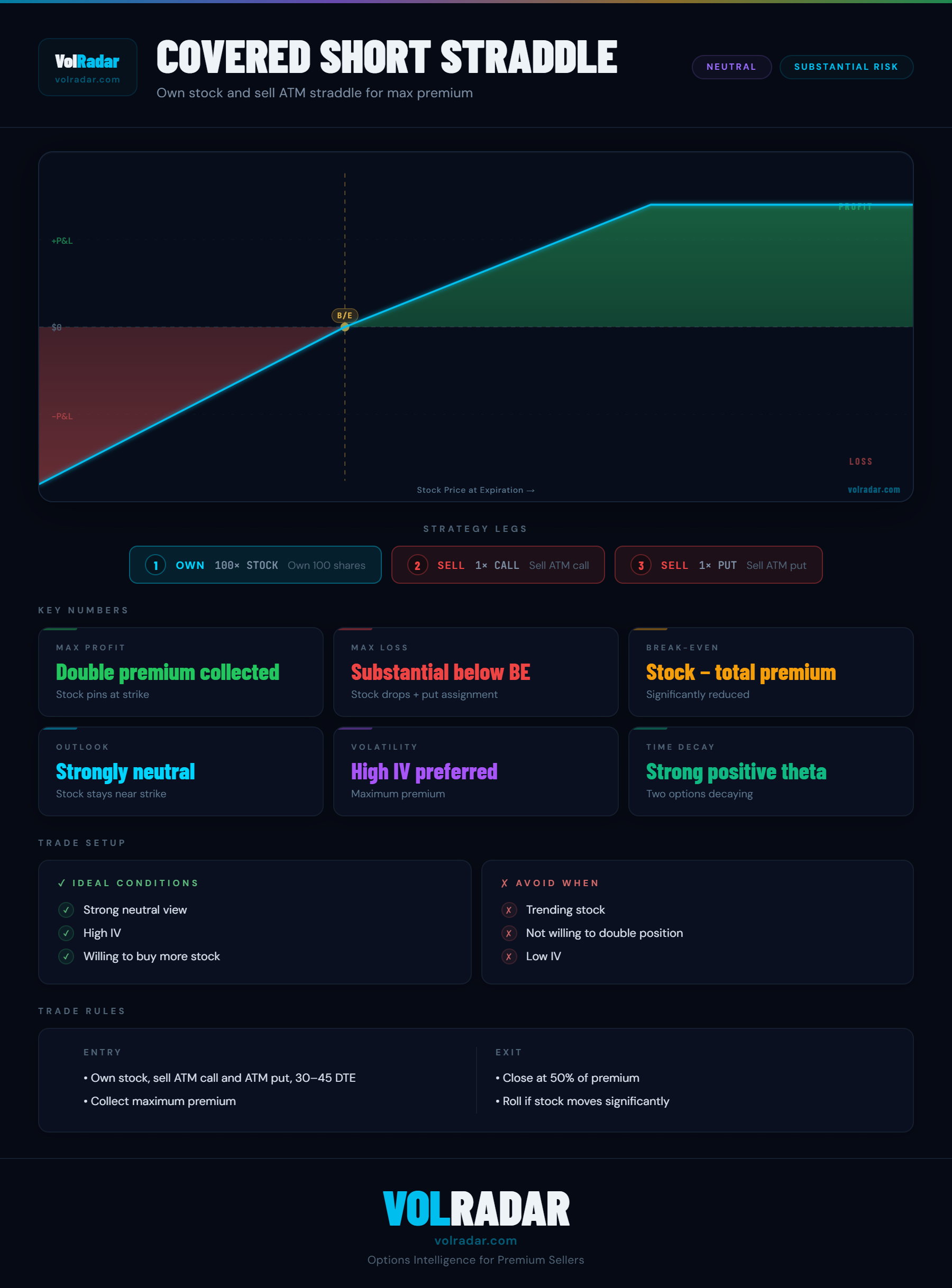
Covered straddle vs covered call
A covered call sells only the call against owned shares — limited income but manageable risk. A covered straddle adds a short put, collecting additional premium but adding the risk of a double stock assignment if the stock falls. The covered straddle should only be used on stocks you would be willing to own in larger quantity (200 shares) at lower prices. It is effectively a high-conviction, income-maximizing trade on a single stock.
When to use a covered straddle
Use when IV Rank is very high, the stock has strong support below, and you have strong conviction the stock will stay range-bound. The elevated premium from selling both sides compensates for the additional downside risk. Avoid before earnings or other catalysts where a large directional move could result in assignment on both sides simultaneously. Best used on high-IV, stable, dividend-paying stocks.
Risk and assignment scenarios
If stock stays between the strikes: both options expire worthless, keep full premium (best case). If stock rises above call strike: shares called away at strike, keep premium, no longer own shares. If stock falls below put strike: assigned additional 100 shares at put strike, now own 200 shares at a higher cost basis. The downside scenario can be significant — be prepared to hold or manage 200 shares in a falling market.