
What is an inverse iron butterfly?
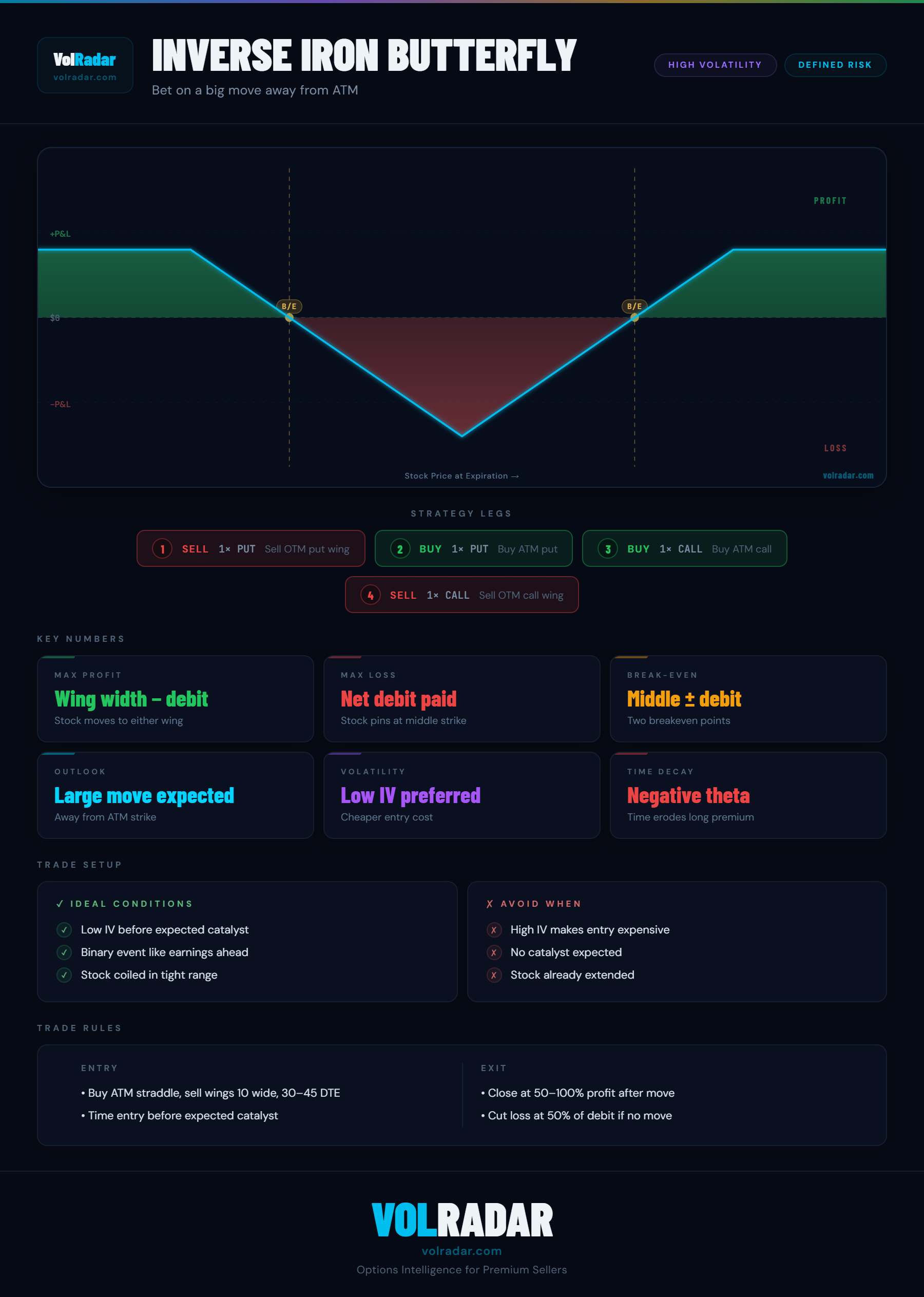
An inverse iron butterfly reverses the standard iron butterfly: buy 1 ATM call and 1 ATM put (the straddle), then sell 1 OTM call and 1 OTM put (the wings). The short OTM options reduce the net cost of the long straddle. The position profits if the stock makes a large move in either direction beyond the breakevens. Unlike a naked long straddle, the risk is fully defined — max loss is the net debit.
Inverse iron butterfly vs long straddle
A long straddle has unlimited profit potential on large moves and costs more. An inverse iron butterfly caps the profit at the wing strikes but costs significantly less. If you expect a very large move (2σ or more), the long straddle captures more profit. If you expect a moderately large move (1–1.5σ), the inverse butterfly is more capital efficient — the wings fund a substantial portion of the straddle cost.
When to use an inverse iron butterfly
Use before known catalysts (earnings, FOMC, binary events) when you expect a significant move but want defined risk. IV does not need to be low — the structure benefits from any large directional move regardless of IV changes. Set the long straddle at the current price and the short wings at where you expect the stock to reach in either scenario. The asymmetric version (different wing distances) can also express a directional view.
Risk and reward
Max loss is the net debit paid. Max profit is the wing width minus the debit, achieved when the stock moves to or beyond either short wing strike. Breakevens are the ATM strike plus and minus the net debit. The risk-to-reward ratio can be attractive — a $1 debit on a $5-wide wing gives a 4:1 reward-to-risk. Model in the Strategy Builder to find the optimal wing distance for your market outlook.